
Brutalist
Architecture
Like its contemporary the International Style, Brutalism passionately championed late 20th-century modernity: purity of form and a steadfastness to look only to the future. Brutalism took these principles even further, obsessing over idealized notions of utility. All ornamentation was strictly forbidden, and only pragmatic materials were allowed, namely the raw concrete (béton brut) that lent the style its name. To underscore honesty, building features usually hidden away – stairwells, walkways, elevator banks - were instead featured prominently. Today, Brutalist buildings stand as inspiration for post-apocalyptic films and stark reminders of how quickly utopian ideas can turn into dystopian realities.
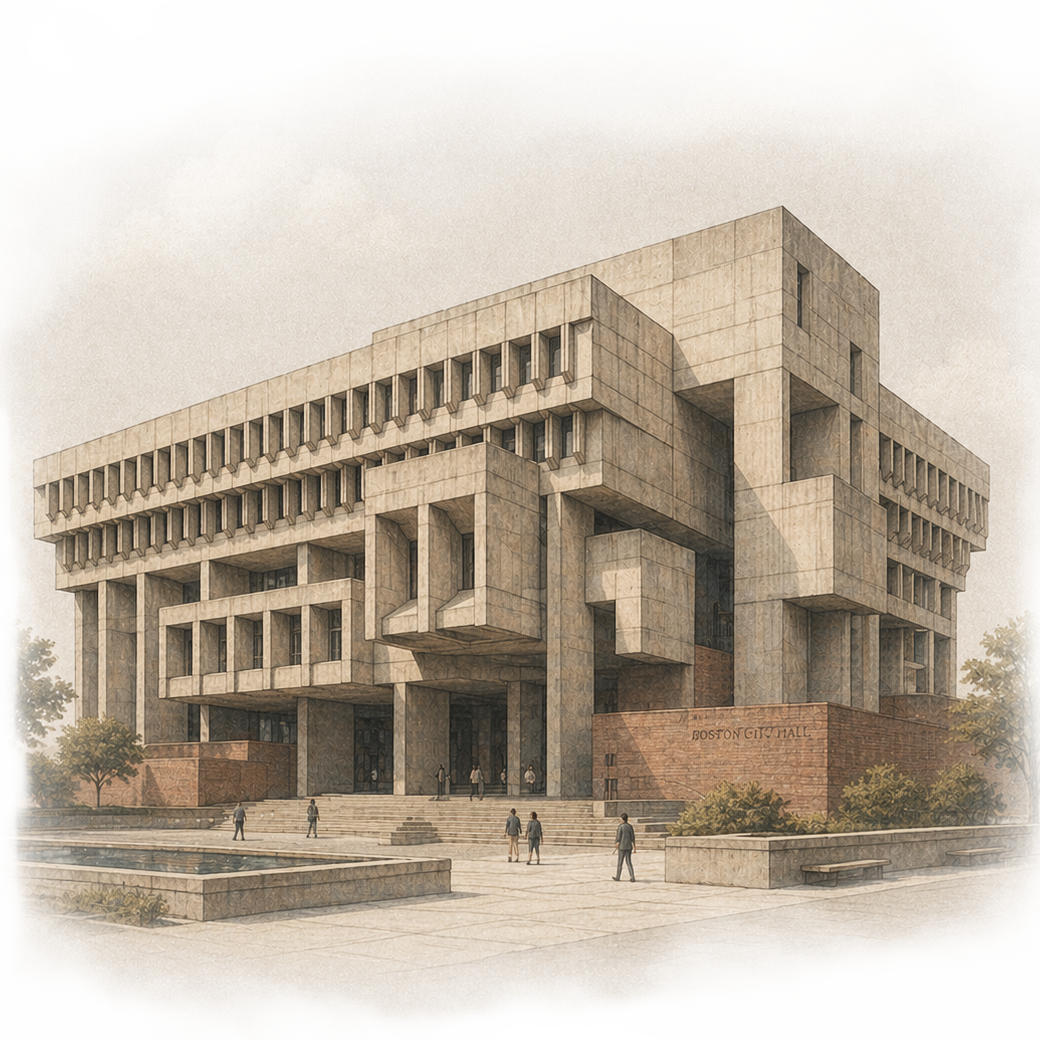
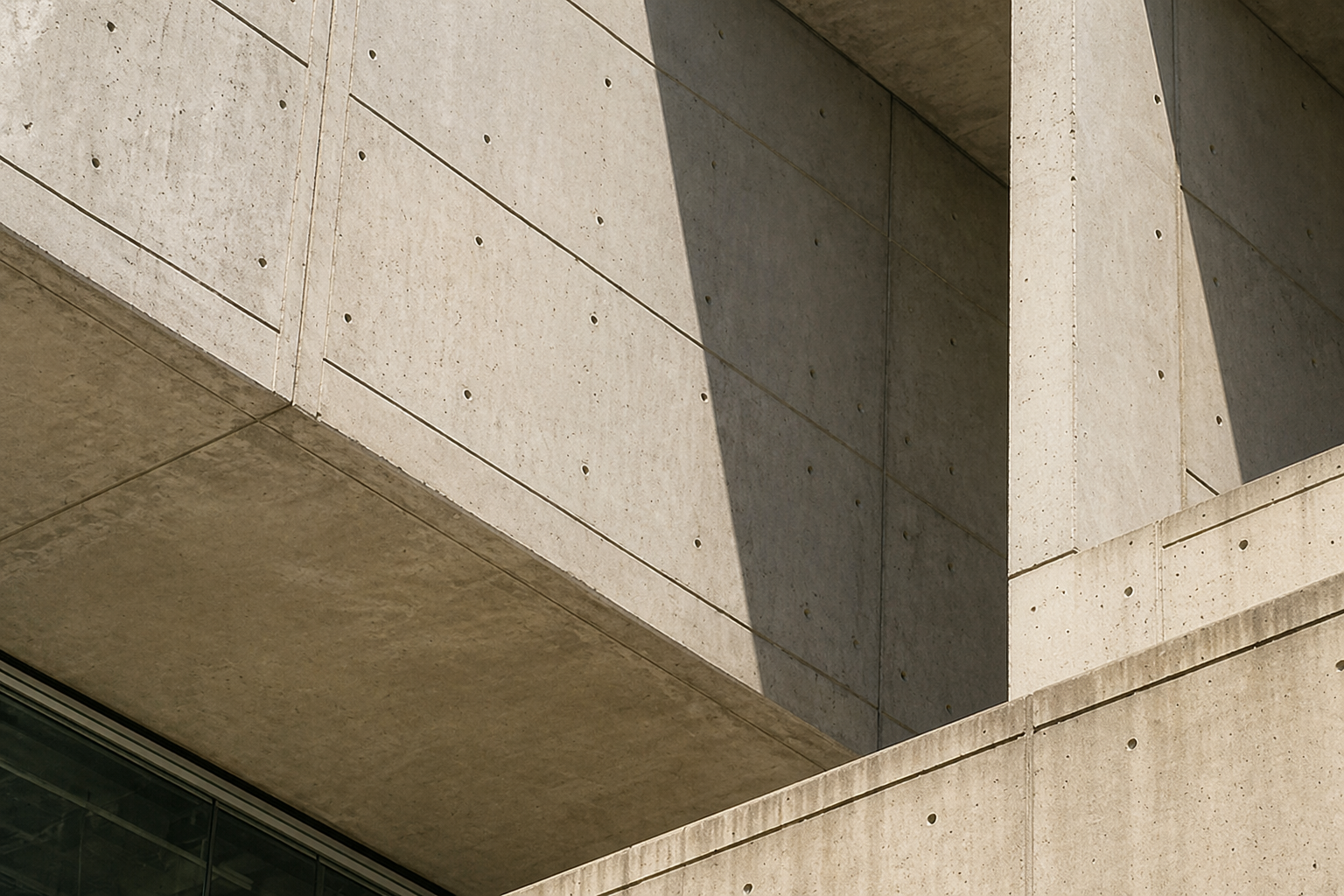
Raw concrete
The French word for raw concrete lends the style its name, and also its "honest" quality by showcasing an untampered, unrefined raw material
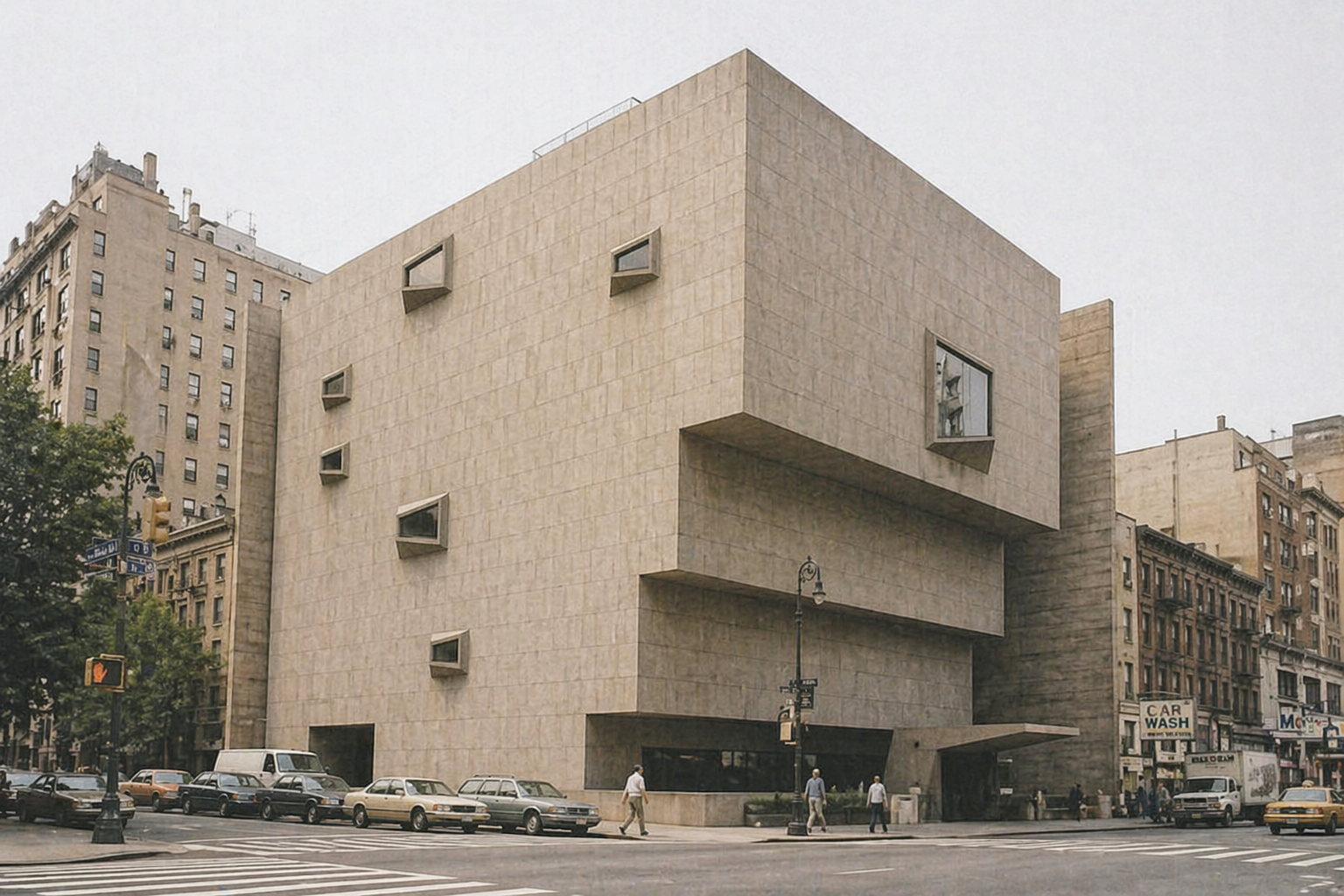
Harsh designs and roughness
The heavy use of concrete means the overall aesthetic of buildings is harsh and striking, with rough surfaces and little to no ornamentation
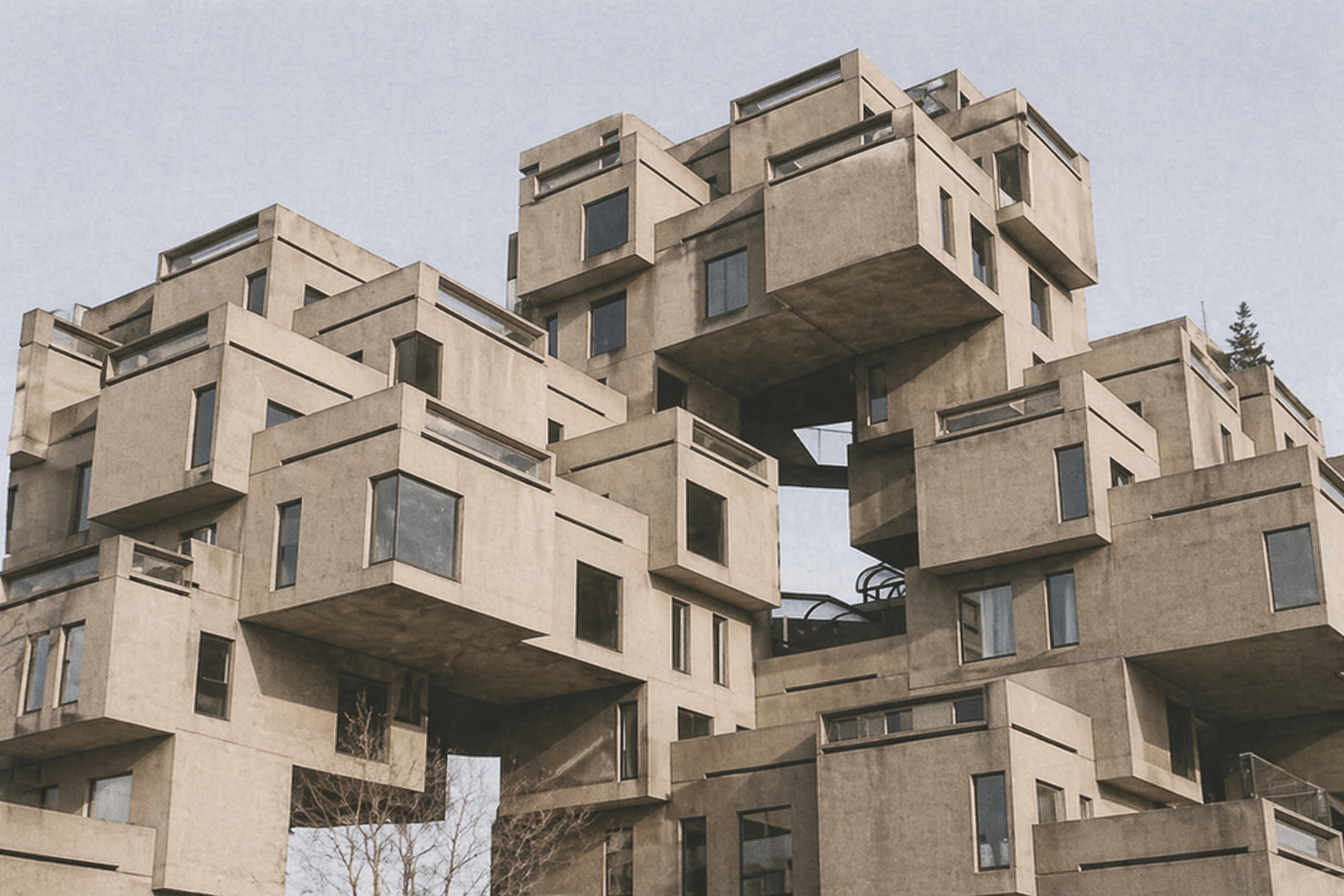
Blocky, cubic shapes
Though curves are not prohibited, most buildings have their forms dictated by geometric, cubic shapes at right angles to each other
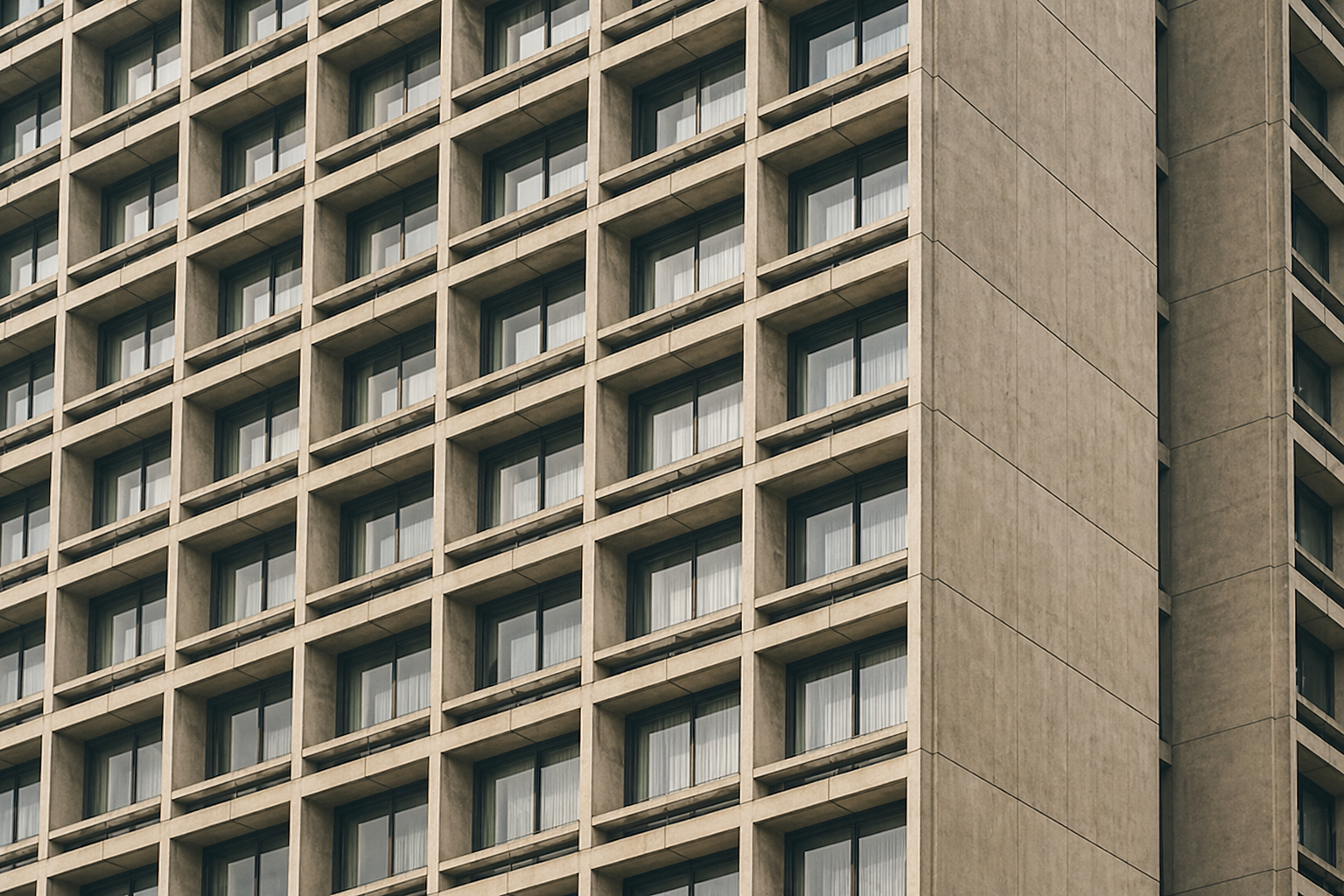
Repetitve modular forms
In keeping with practicality, modular forms repeat with little variation, allowing for economies of scale in construction
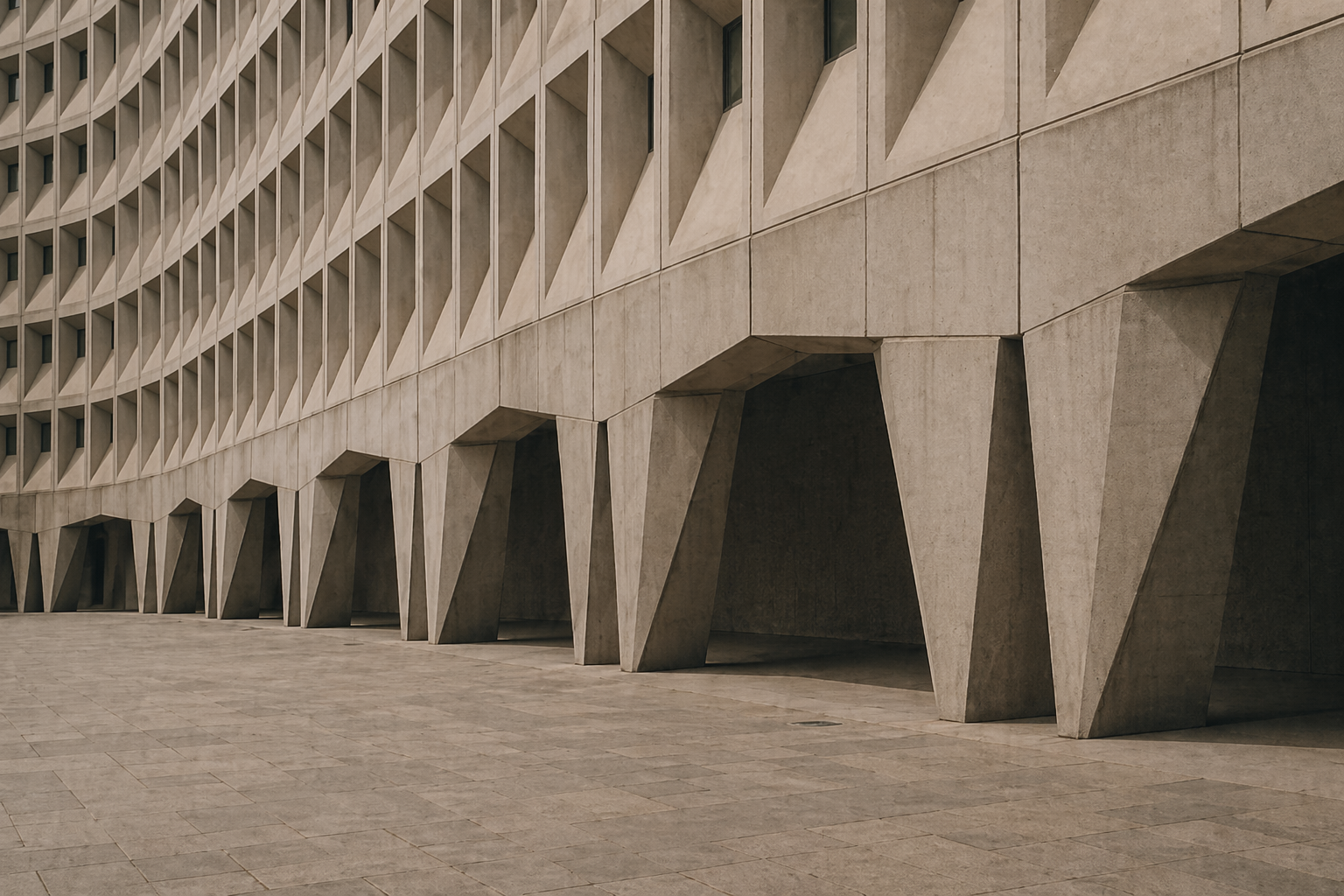
Hard angular shapes
When all the harsh pieces of concrete come together, they tend to form hard angular outlines and rigid shape; organic beauty is nowhere to be found here
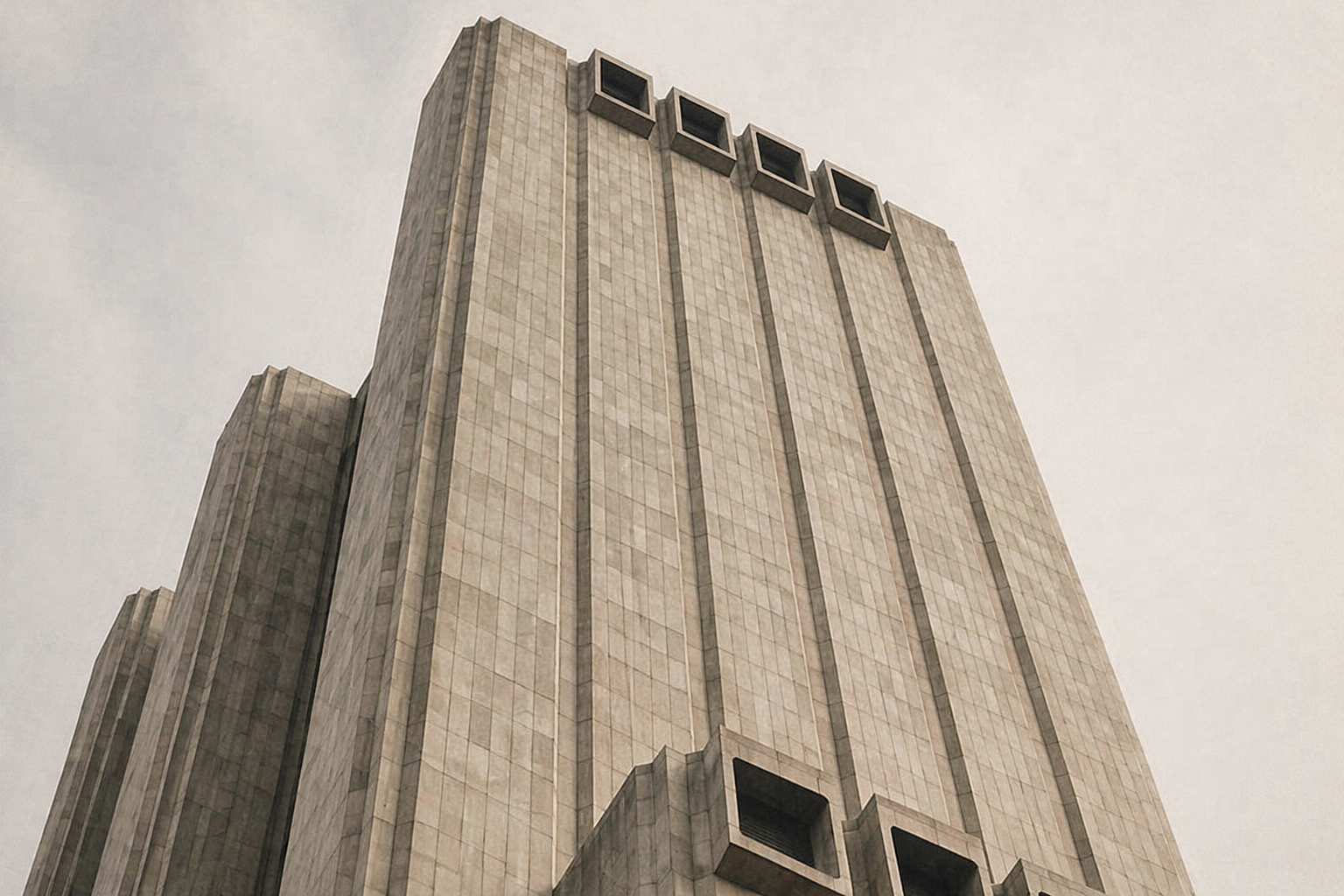
Imposing presence
An abundance of concrete and minimal ornamentation lends an imposing quality to every structure, big or small
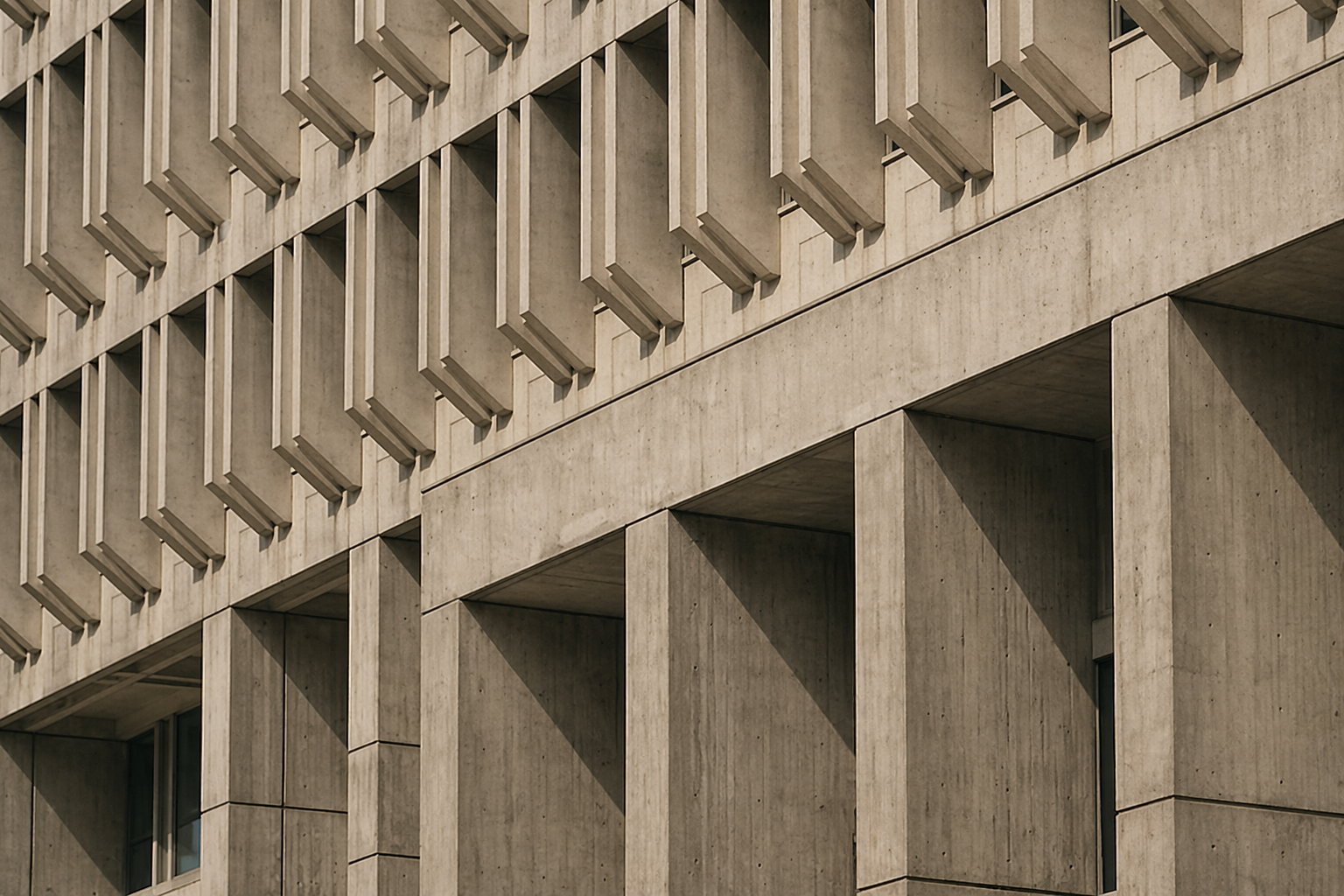
Rigid lines
The majority of buildings in the stlye feature strong lines that lie straight or at defined angles, giving structures very rigid forms
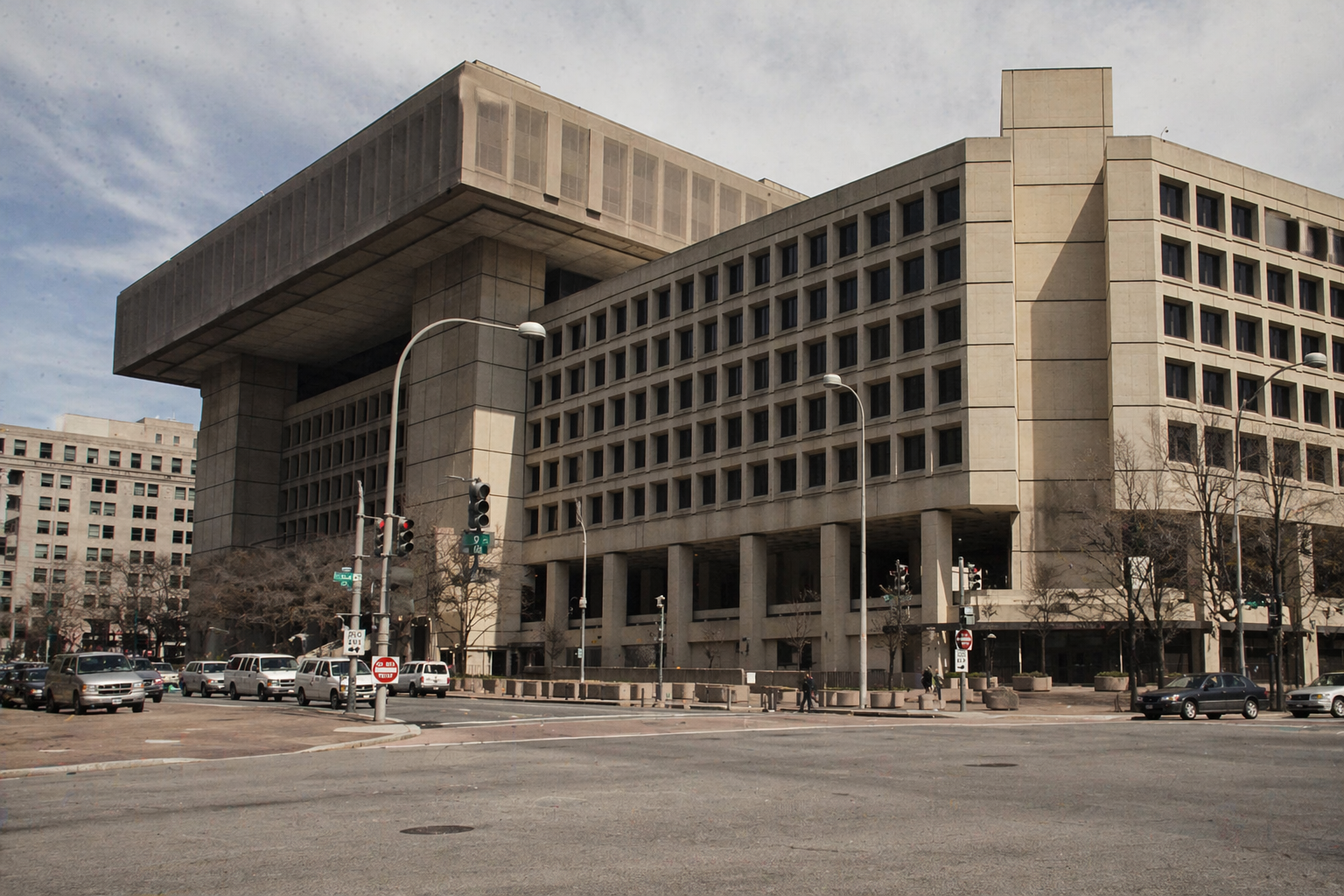
Fortress-like design
These buildings look as if they would be the only kind of structures able to withstand a nuclear war
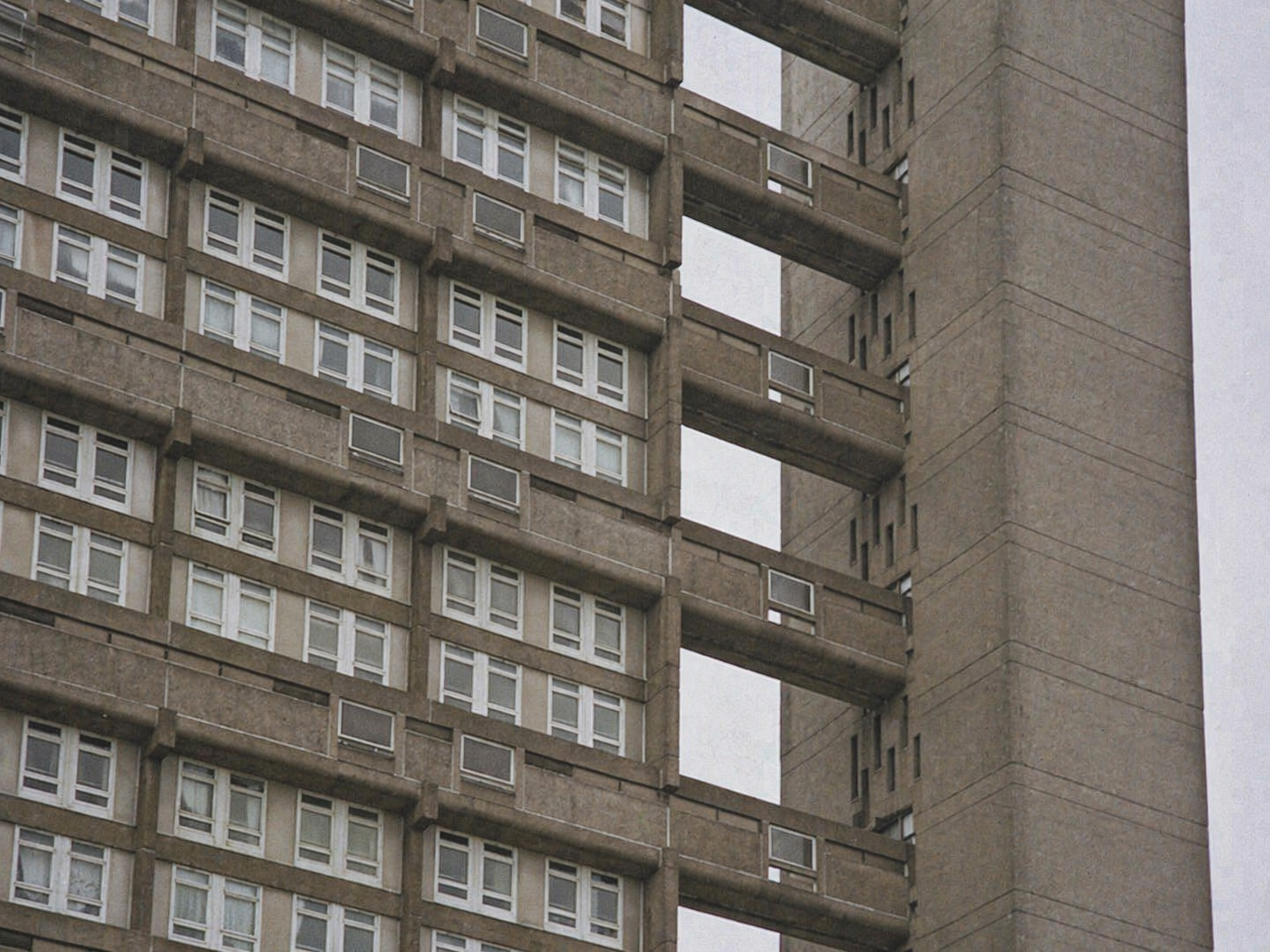
Exposed functions
In keeping with "show it as it is" honesty, stairwells, elevator banks, hallways and other building's features are easily identifiable from the outside
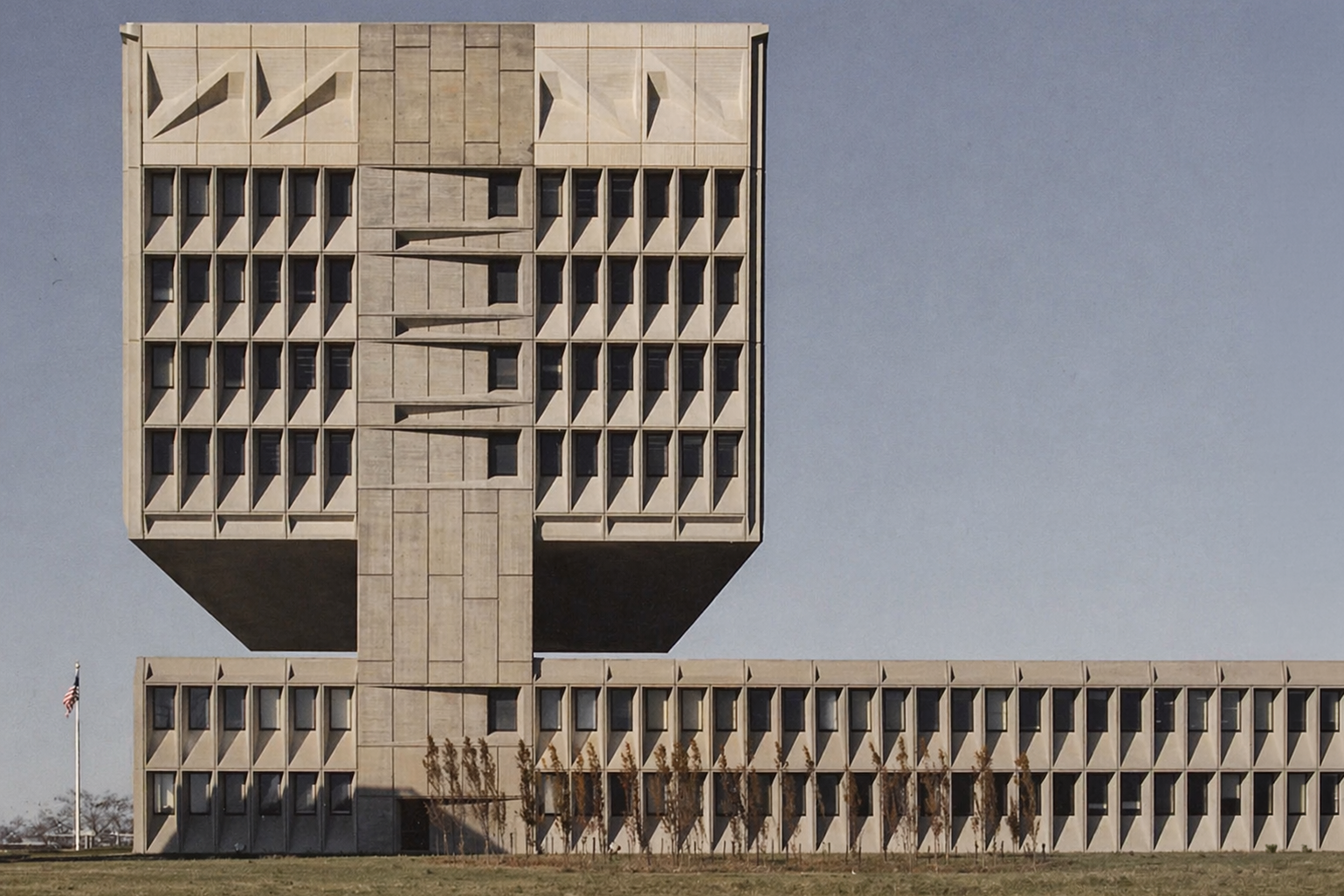
Asymmetry
Though shapes are repetitive and the overall look of a building is similar, there is no real emphasis on symmetry
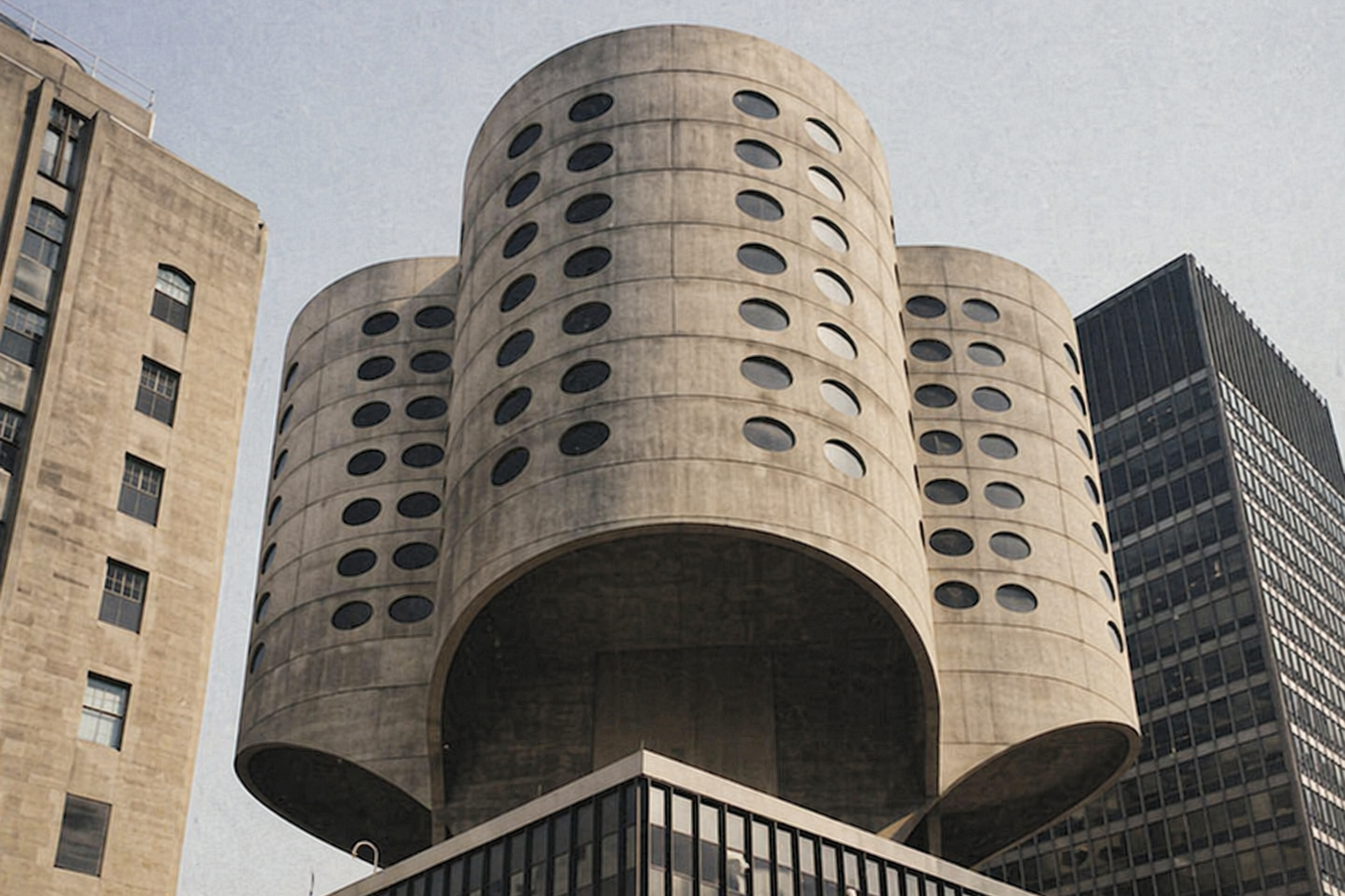
Retro-futuristic feel
Some of the more complex buildings take on a shape reminiscent of what past thinkers may have thought of as futuristic
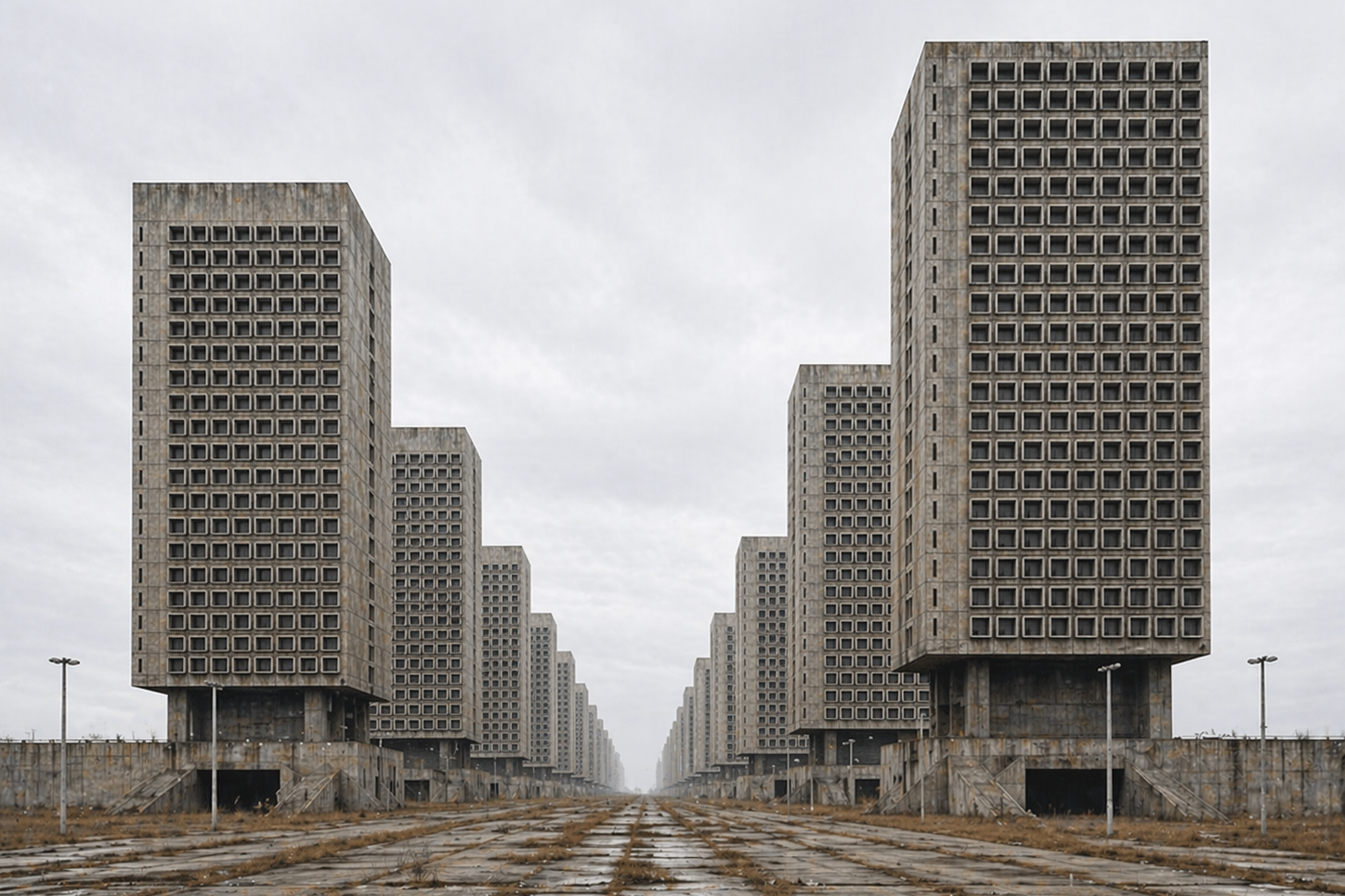
Dystopian aura
Though originally built with utopian visions for housing and civic structures like the Grands Ensembles in Paris, many buildings now embody dystopia
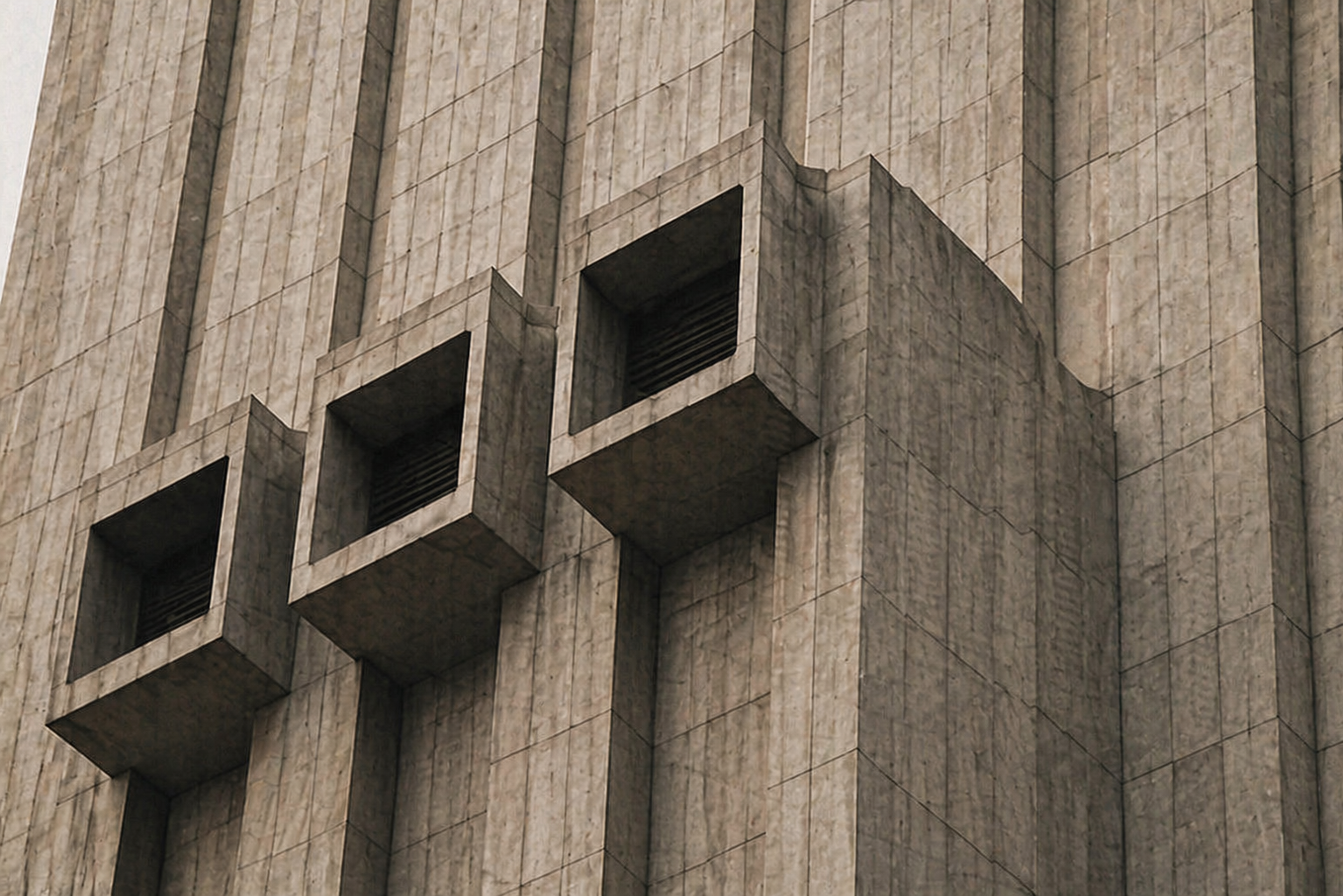
Gaping protrusions
Windows and vents protrude from the surfaces of buildings like gaping concrete mouths
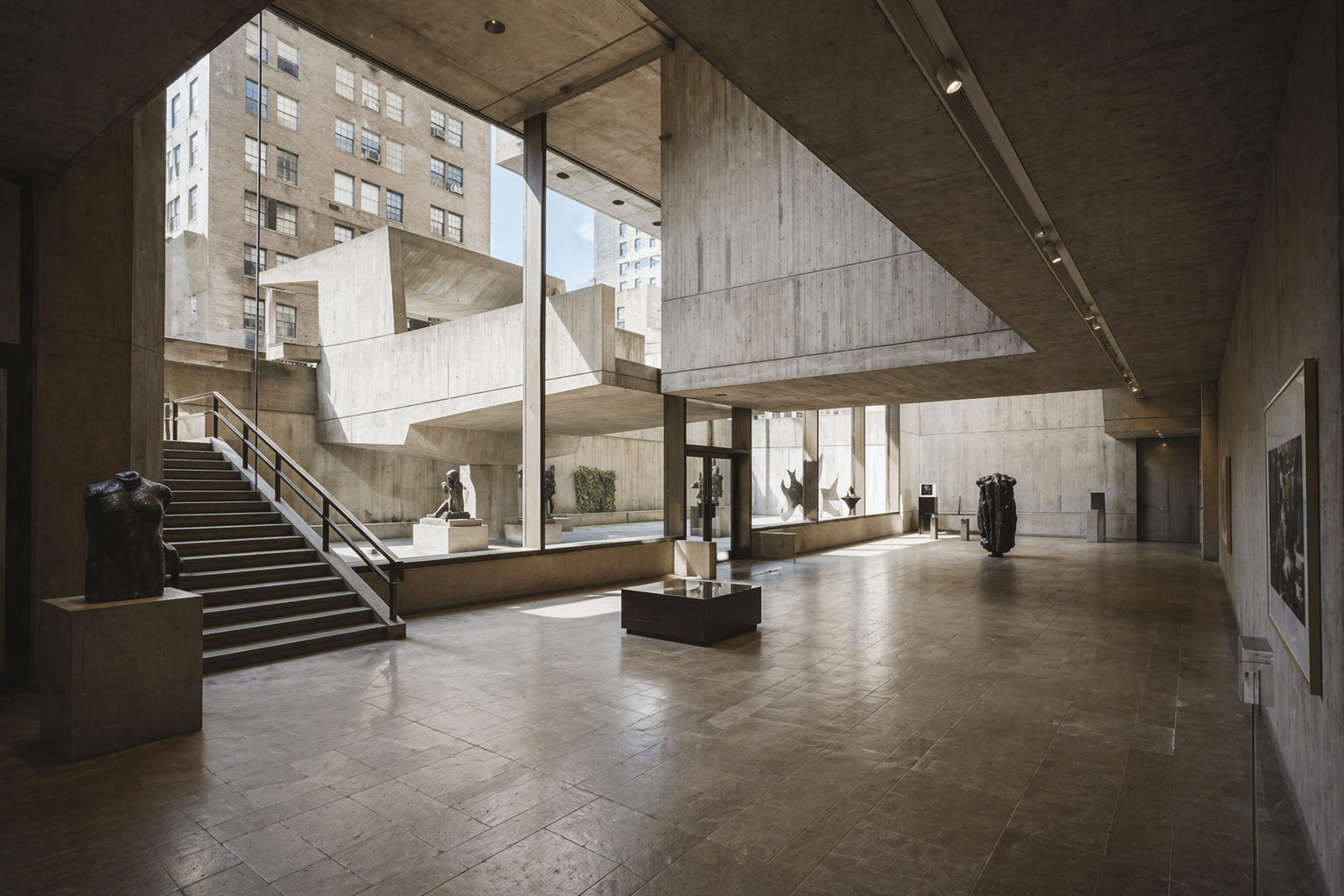
Surprisingly airy interiors
Not all buildings have this feature, but a surprising amount will house airy, cavernous interiors beyond those hulking concrete facades
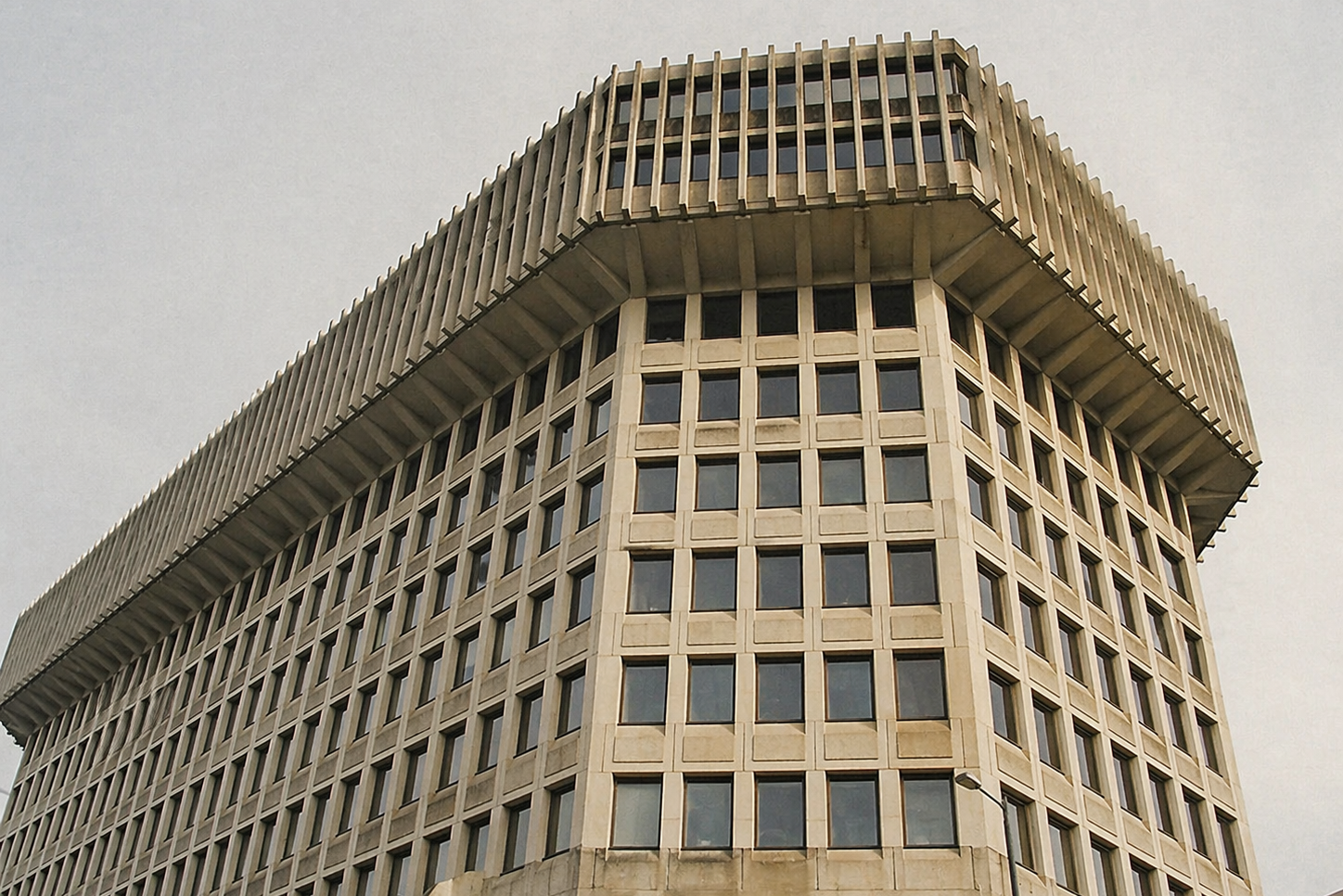
Overhanging chunks
Seemingly against physics, huge chunks of concrete sometimes cantilever over their bulky bases