
International Style
Architecture
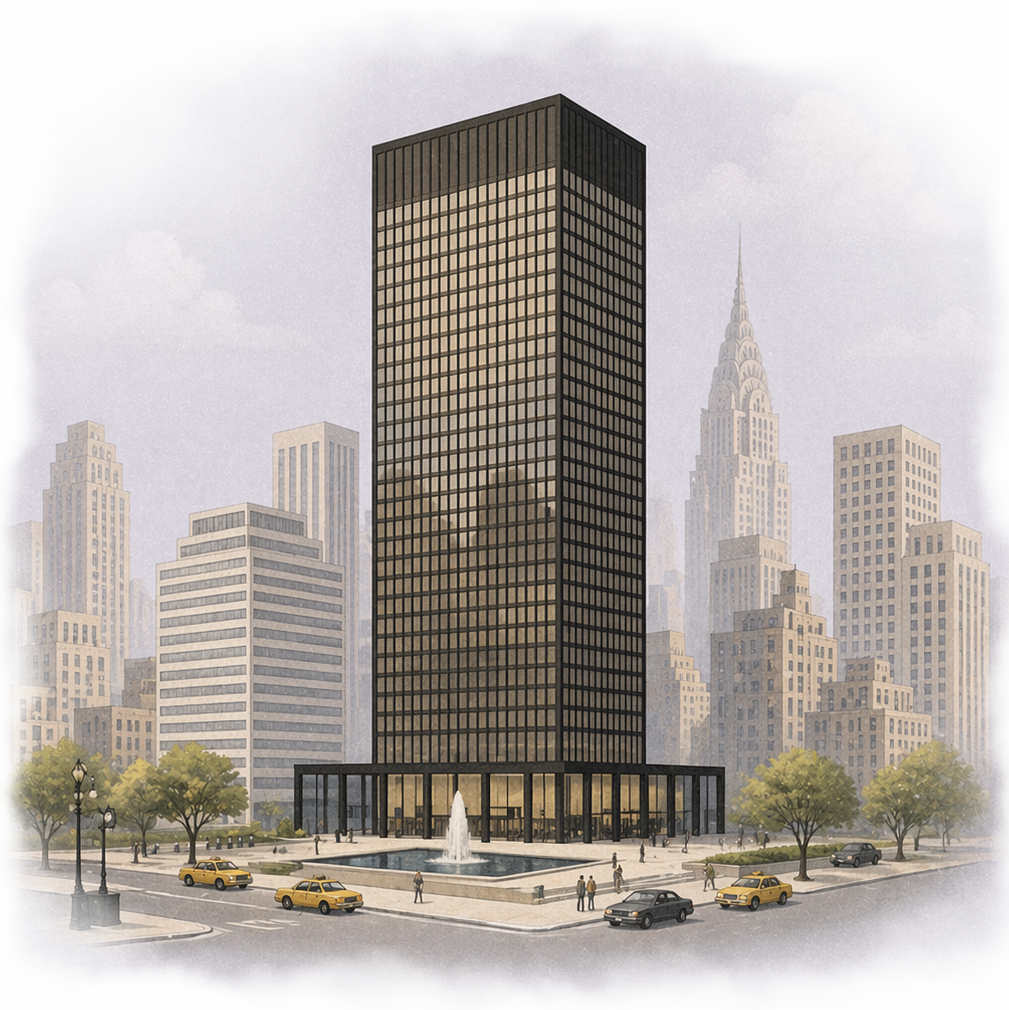
If you've ever stood in the narrow canyons of a major city's downtown, surrounded by identical turrets of sleek metal and glass, and you get the feeling of nameless corporations watching over you, then you are familiar with the International Style. Unlike its predecessor Art Deco, which kept one foot subtly rooted in the past via its restrained decoration and nods to bygone civilizations, the International Style went full-steam into modernity, eliminating any references to past styles and eschewing form in favor of pure function. This approach married perfectly with the post-war corporate philosophy of utilitarianism, and thus the “glass box” became the defining template for office buildings in the mid-century decades.
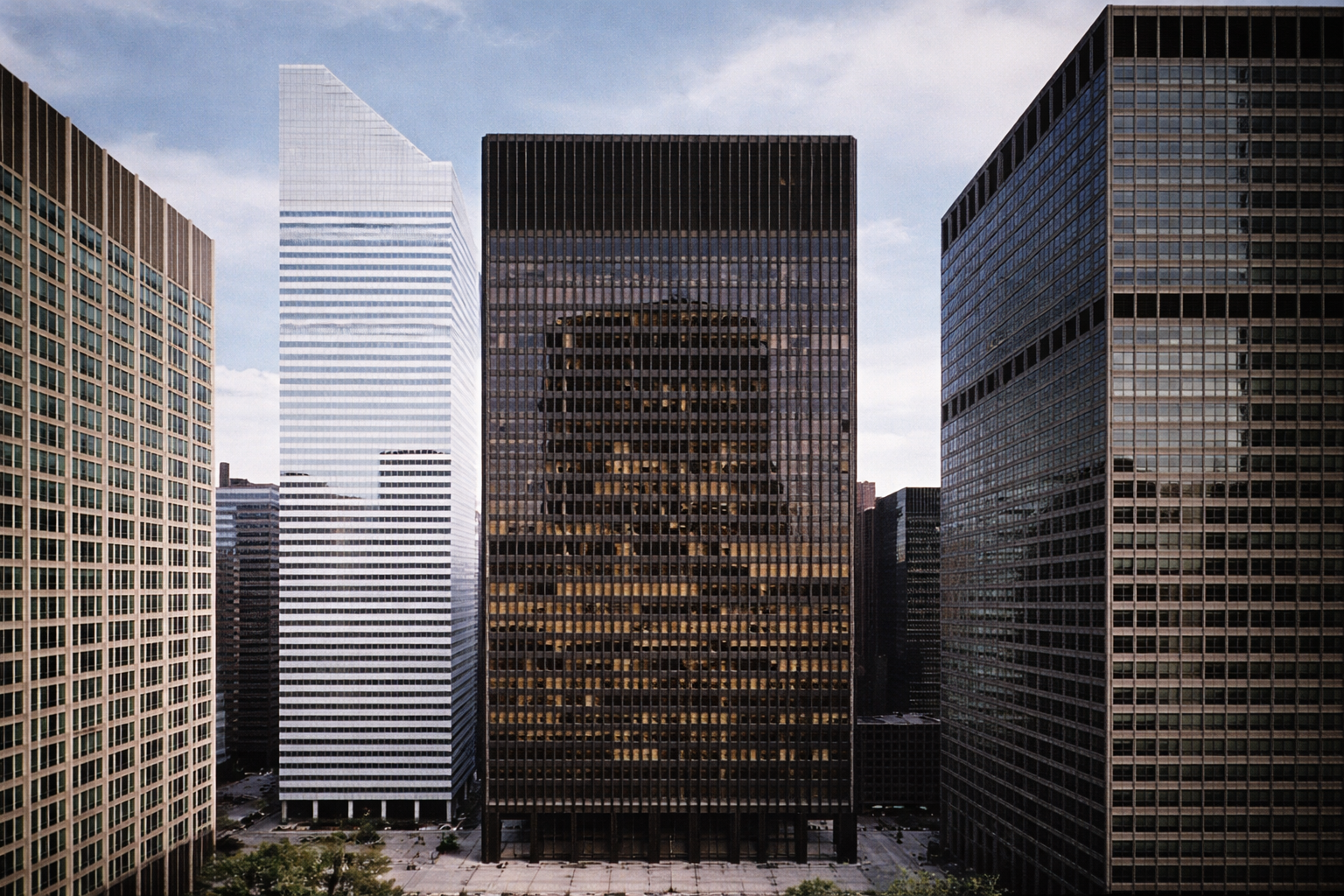
Absence of ornamentation
The name of the game is utility, so any superfluous or unrelated building elements are tossed out, which is one of the defining features of the style
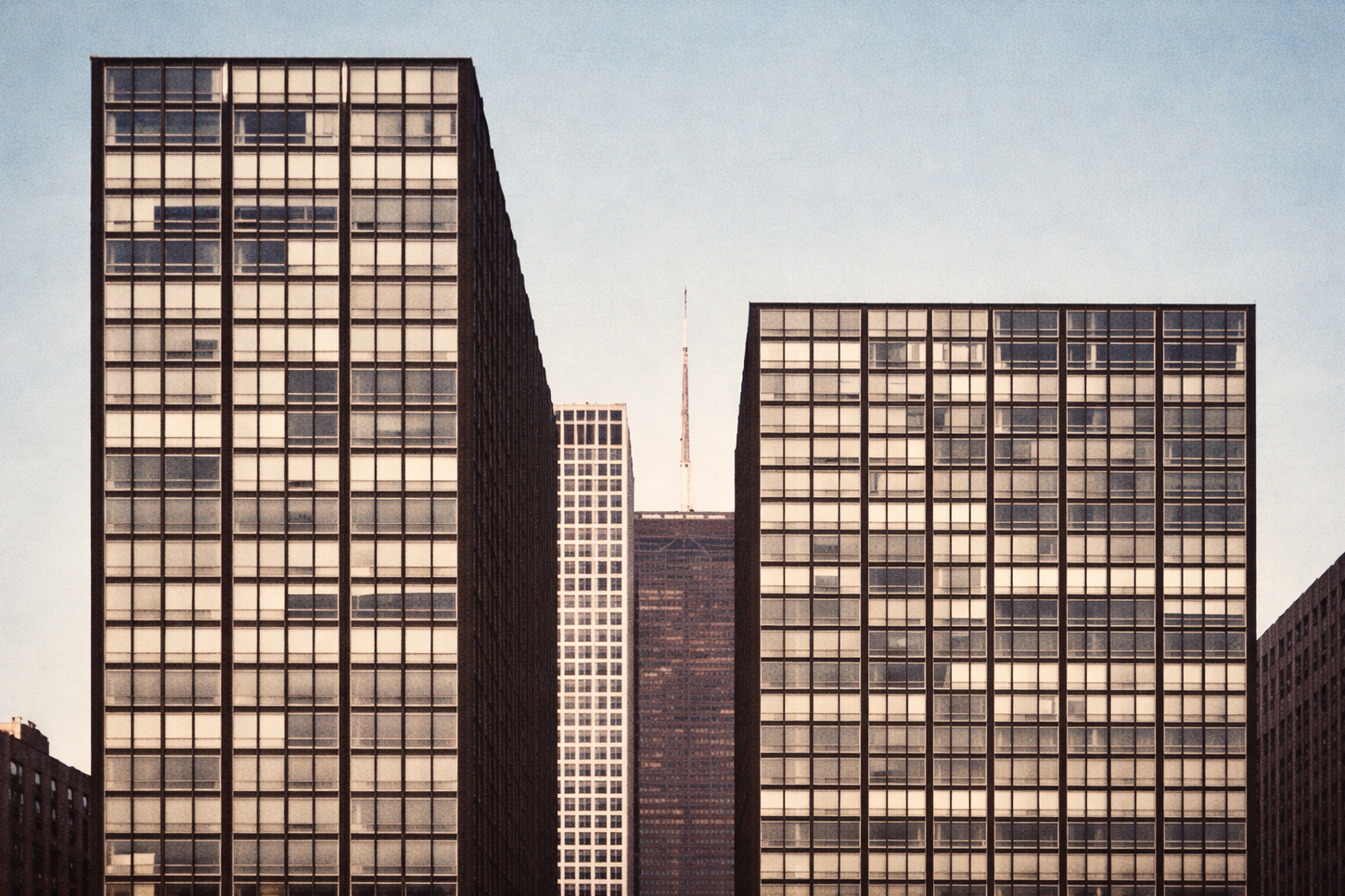
Boxy shapes
An emphasis on minimalism means most buildings have basic, rectangular shapes (hence the "box" part of the "glass box" phrase)
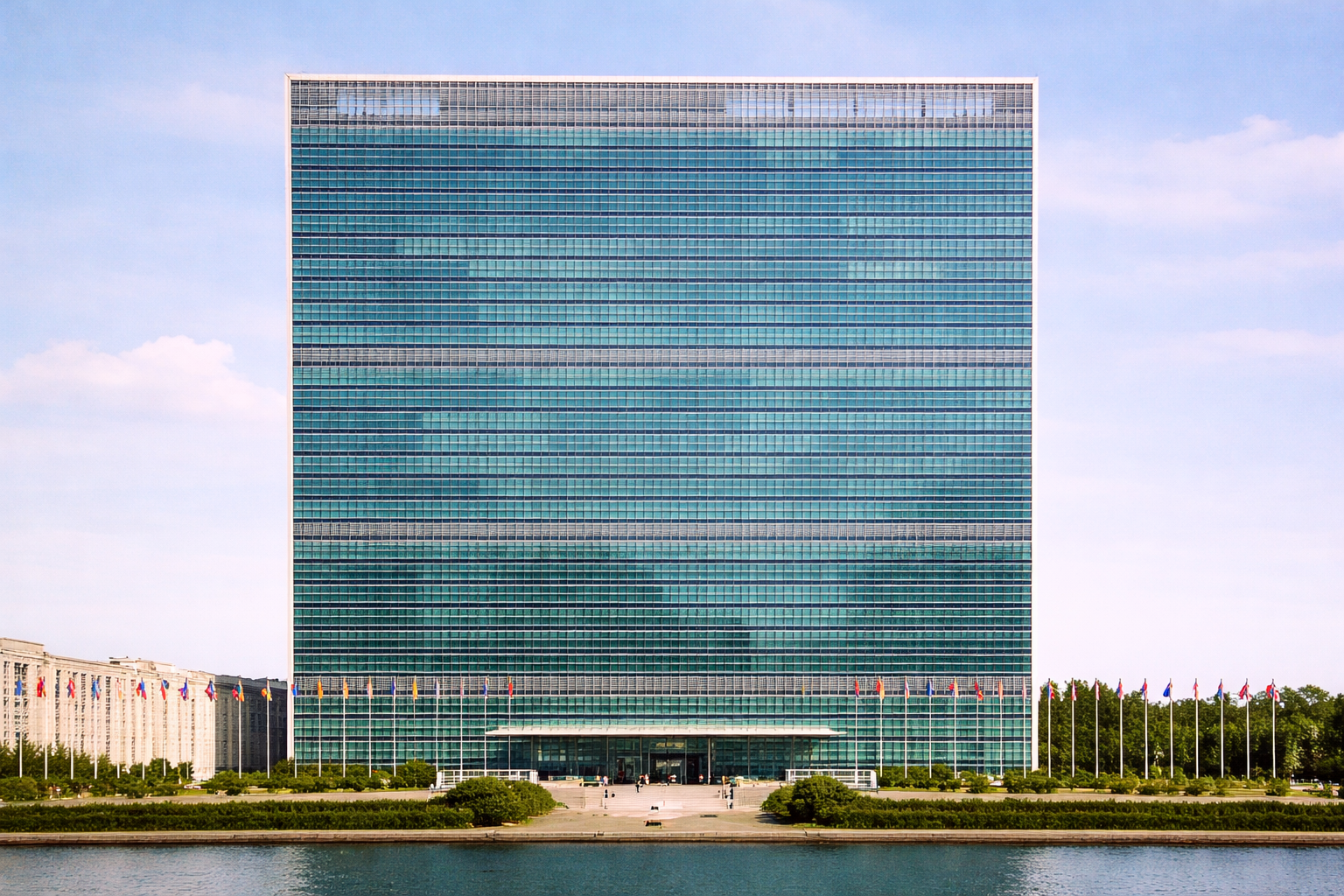
Streamlined surfaces
Glass, especially when used in large sheets for a curtain wall, lends a smooth, streamlined surface (the "glass" part of the phrase)
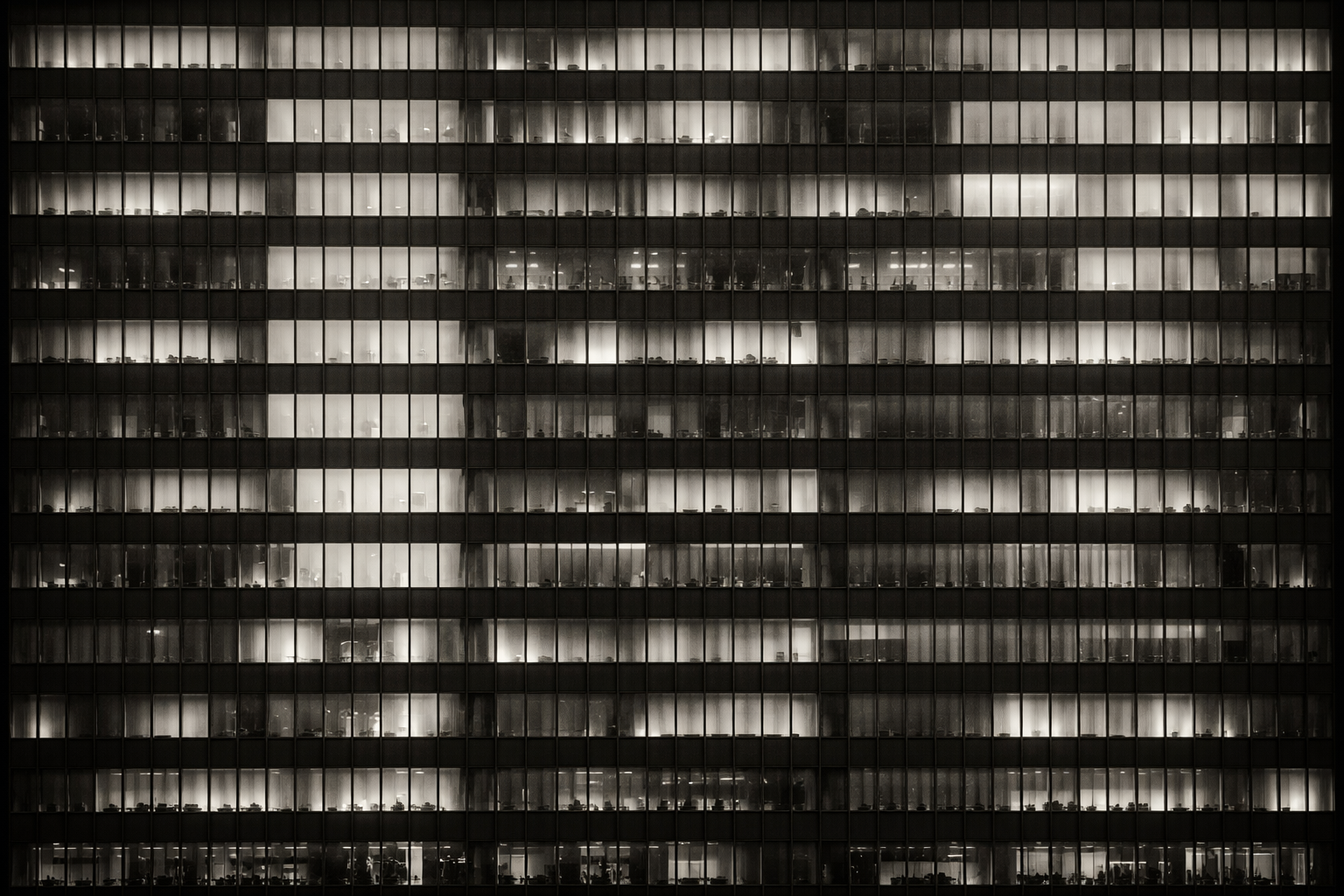
Repetitve modular forms
Small patterns created by steel, concrete and glass are repeated with regularity, making buildings look as if they were constructed in modular sections
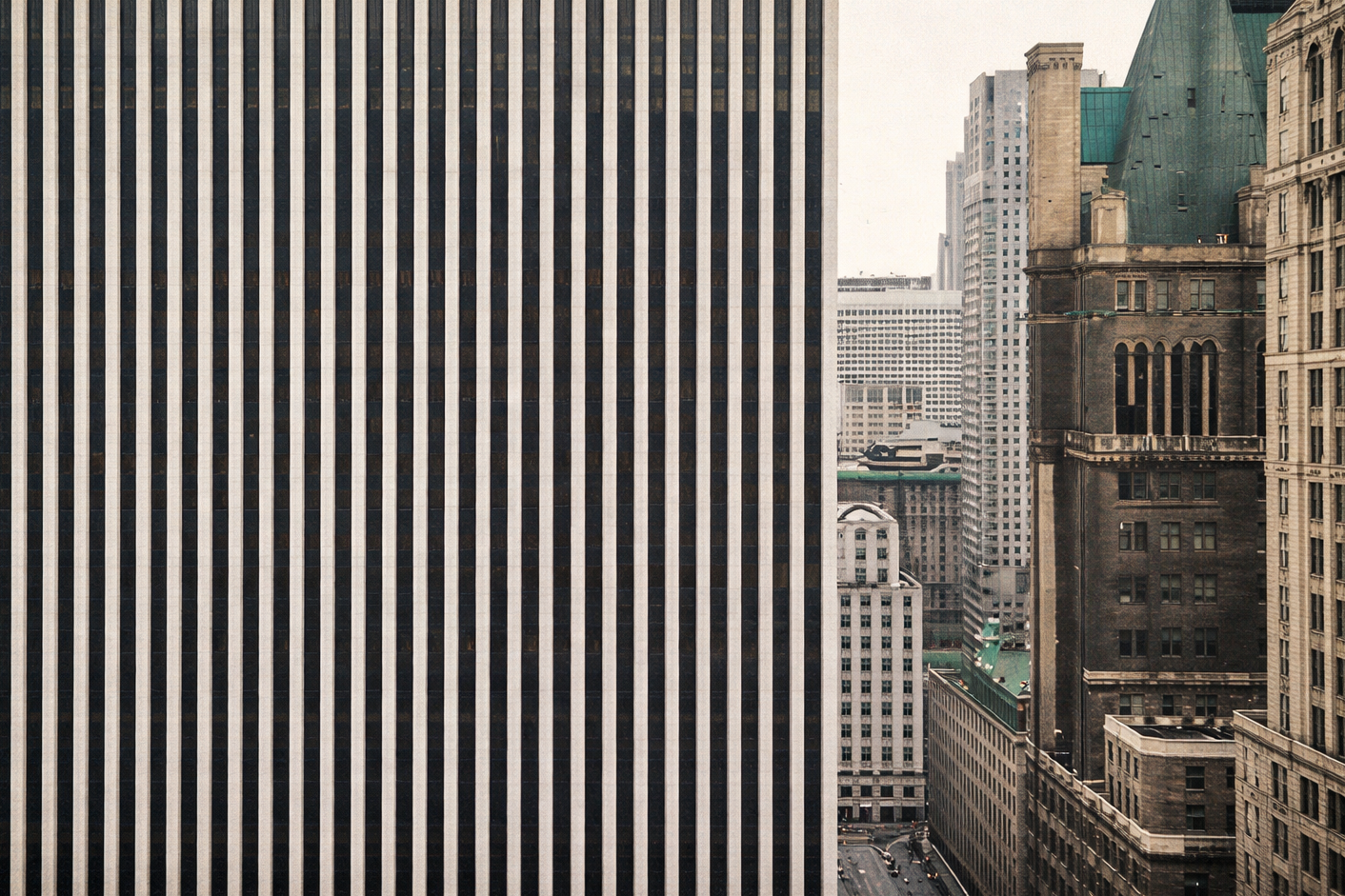
Prominent vertical mullions
Though facades in general are streamlined, it isn't uncommon to see prominent vertical mullions of steel or concrete slightly protruding out
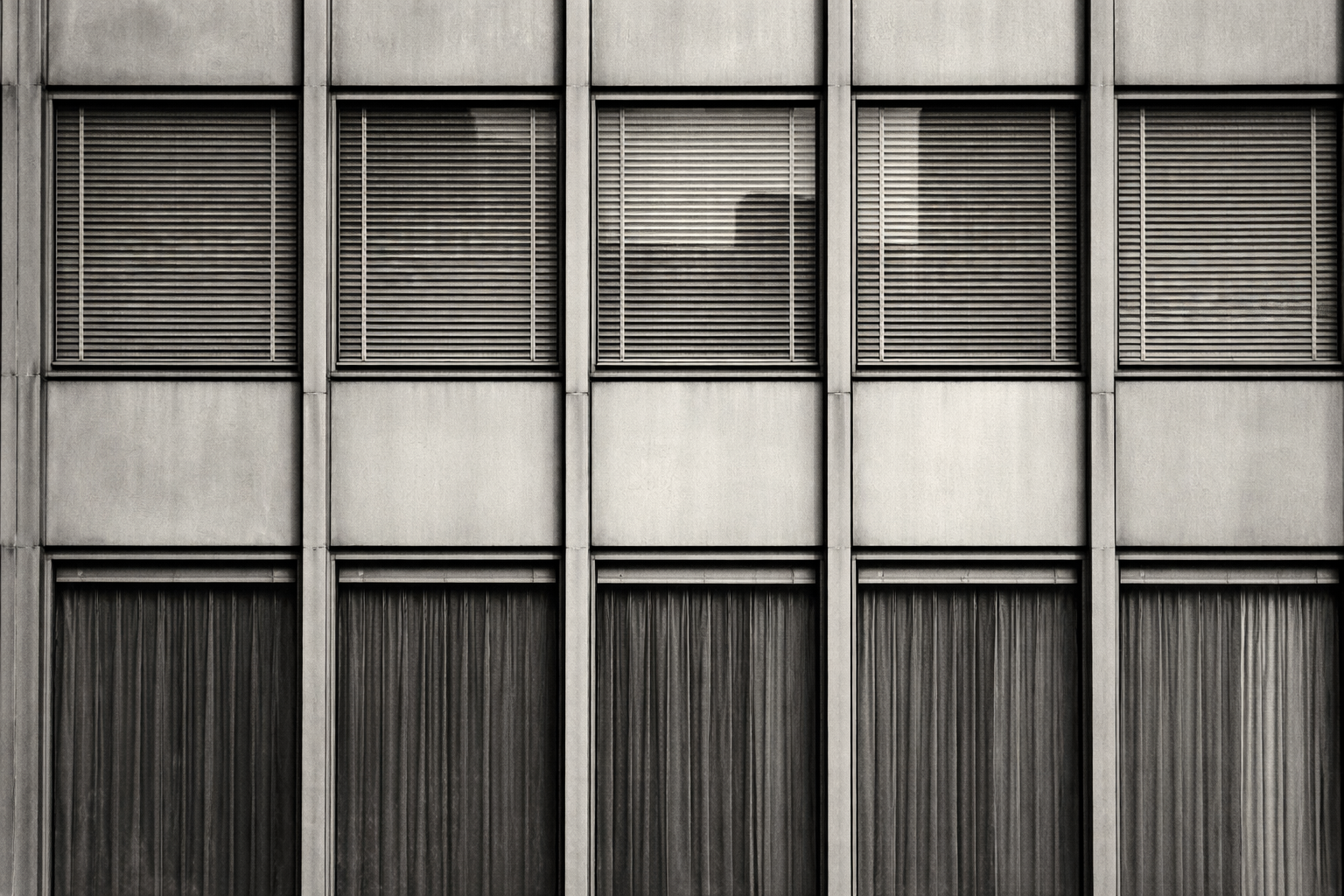
Thick horizontal spandrel panels
While vertical mullions emphasize height, they are balanced out by the horizontal nature of thick spandrel panels, usually of bronze or steel
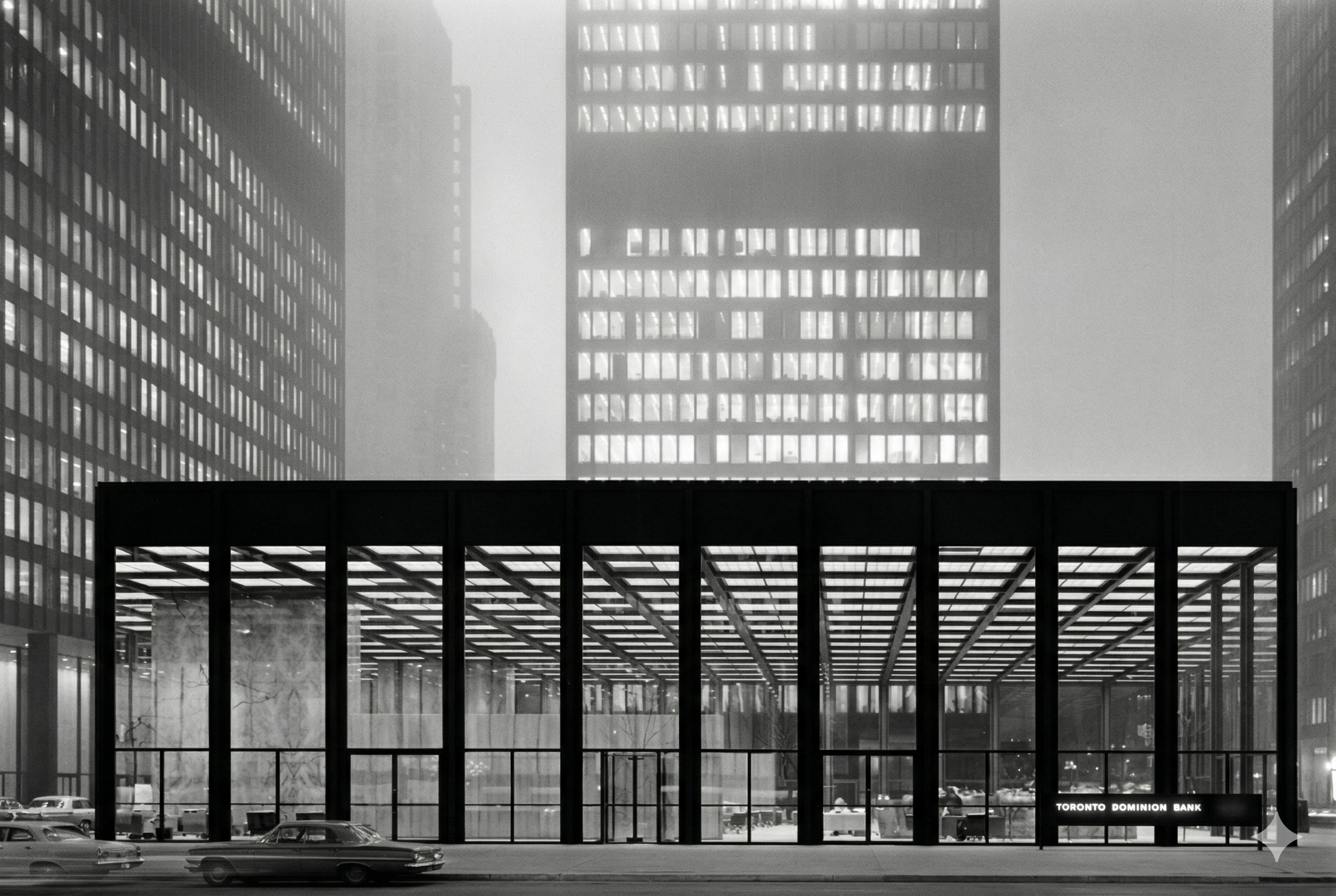
Strong straight lines
Bold horizontal and vertical lines create sharp 90-degree angles and compliment the general boxy shape of the building
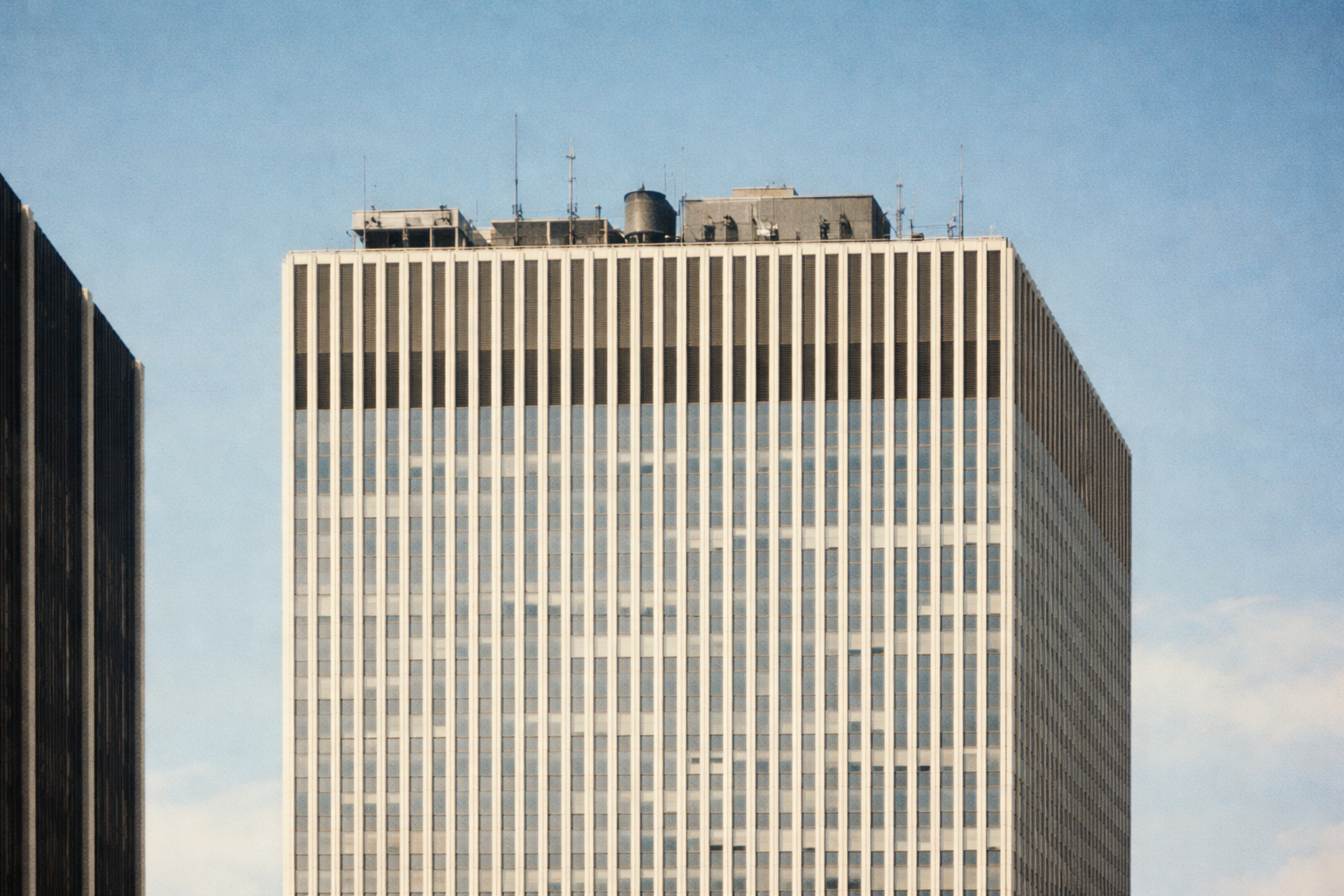
Flat rooflines
In keeping with the streamlined surfaces and unadorned forms, building roofs are almost always flat - you won't see many pitches or angles
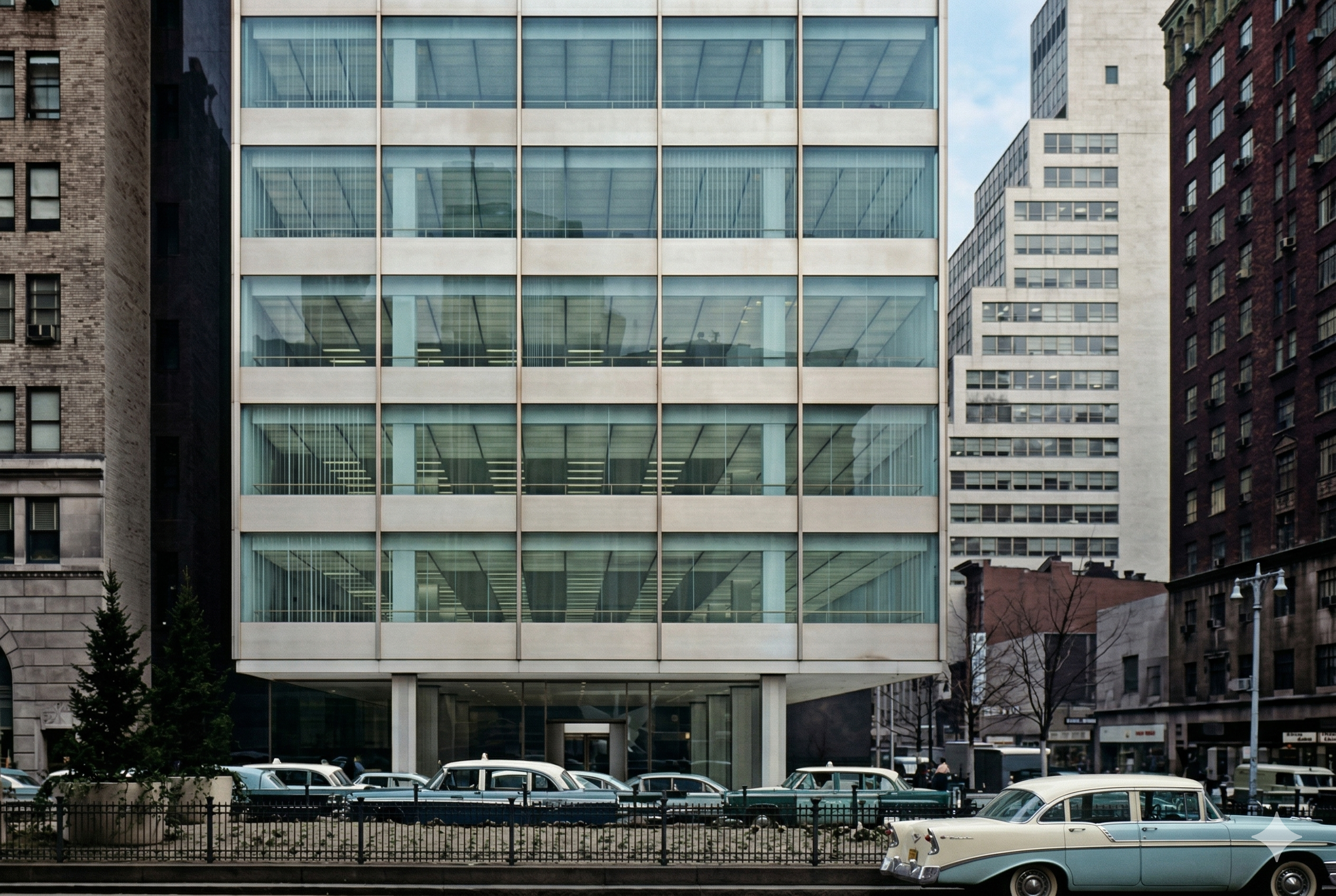
Ribbon windows
Large panes of glass, usually floor-to-ceiling, are arranged into horizontal bands to emphasize space and light as well as to maintain uniformity
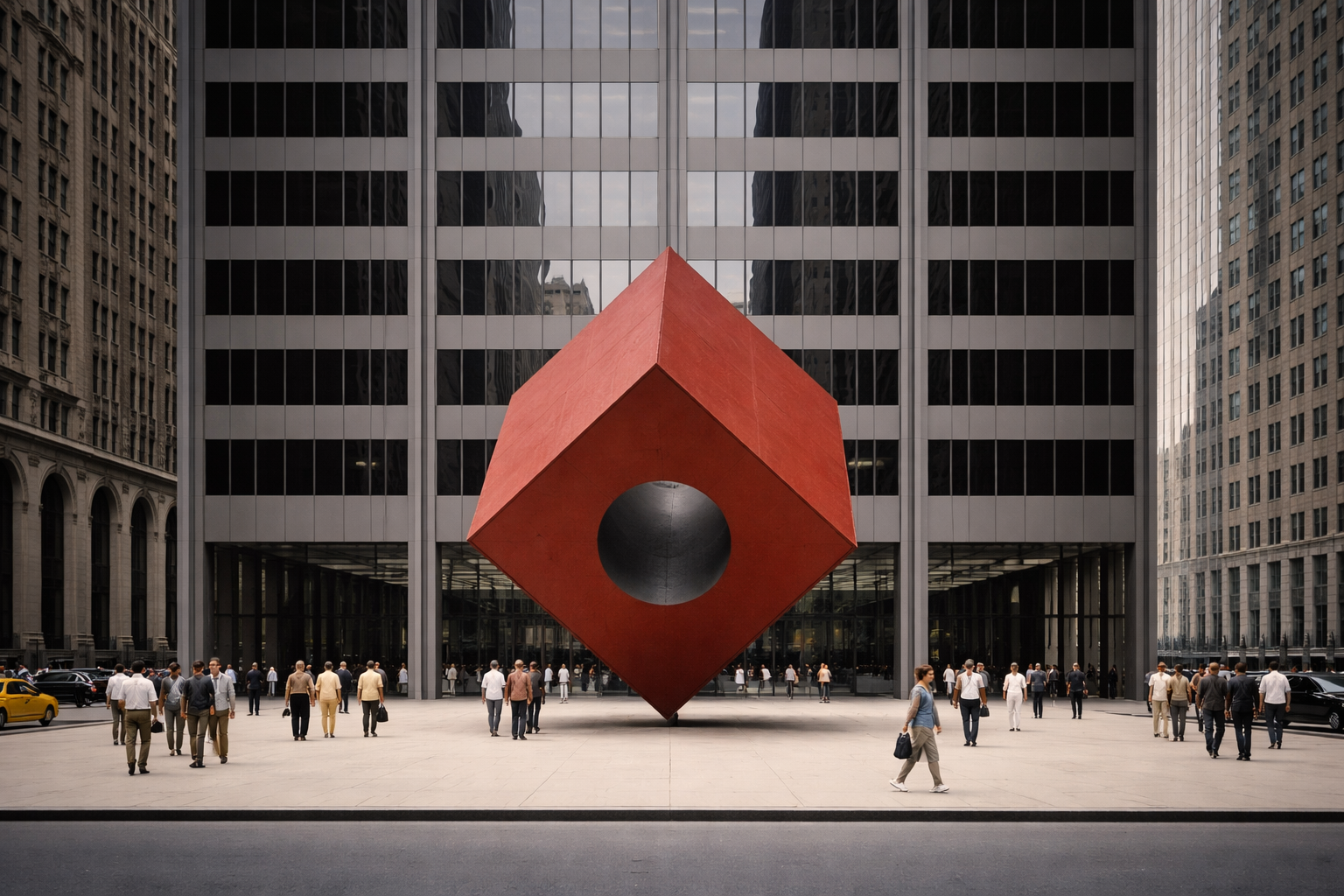
Minimalist plazas
Many buildings are complemented by minimalist plazas surrounding their bases, which frequently feature an abstract sculpture
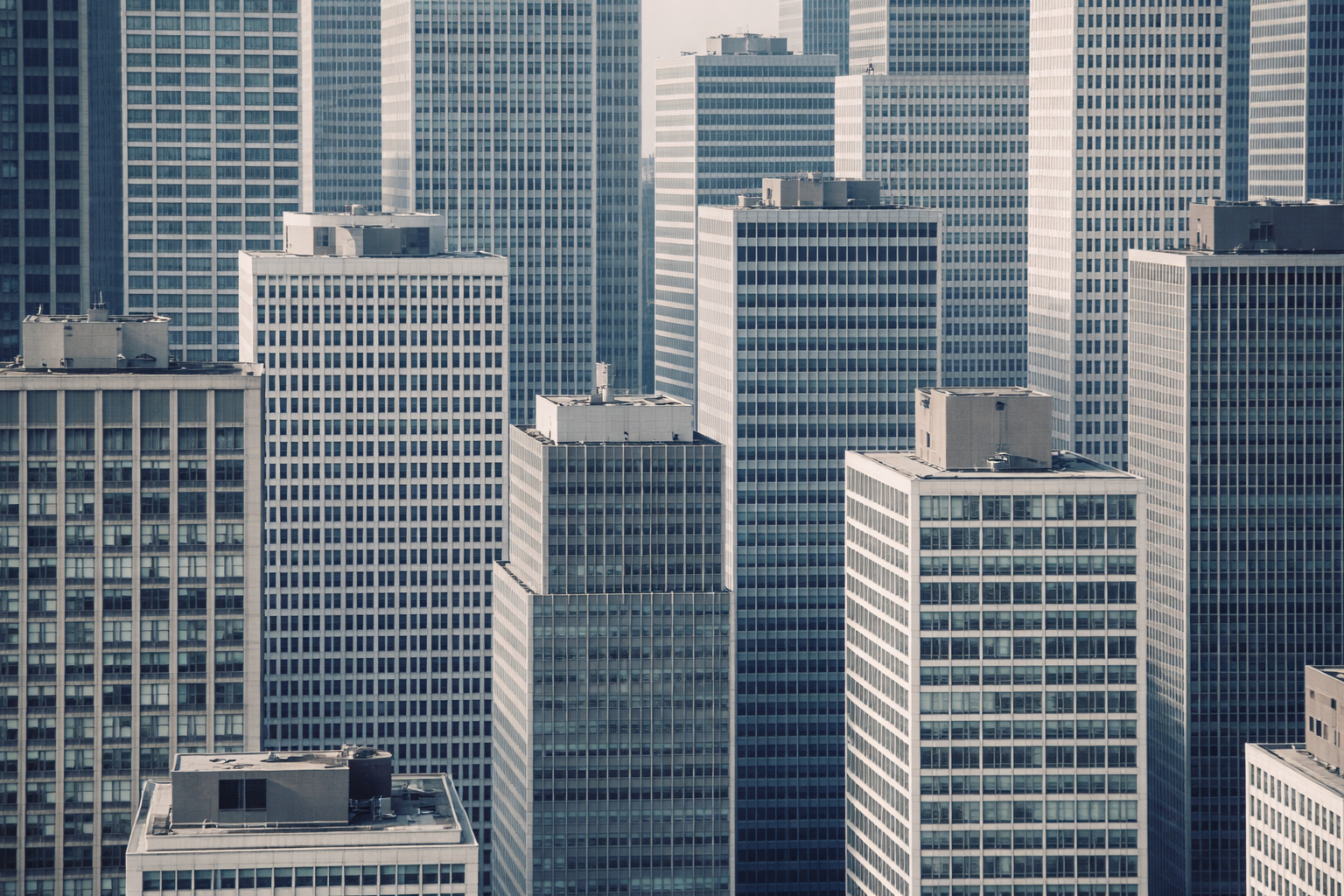
Monotonous uniformity
Because uniformity of features is of utmost concern, monotonous scenes can be created when buildings are grouped together
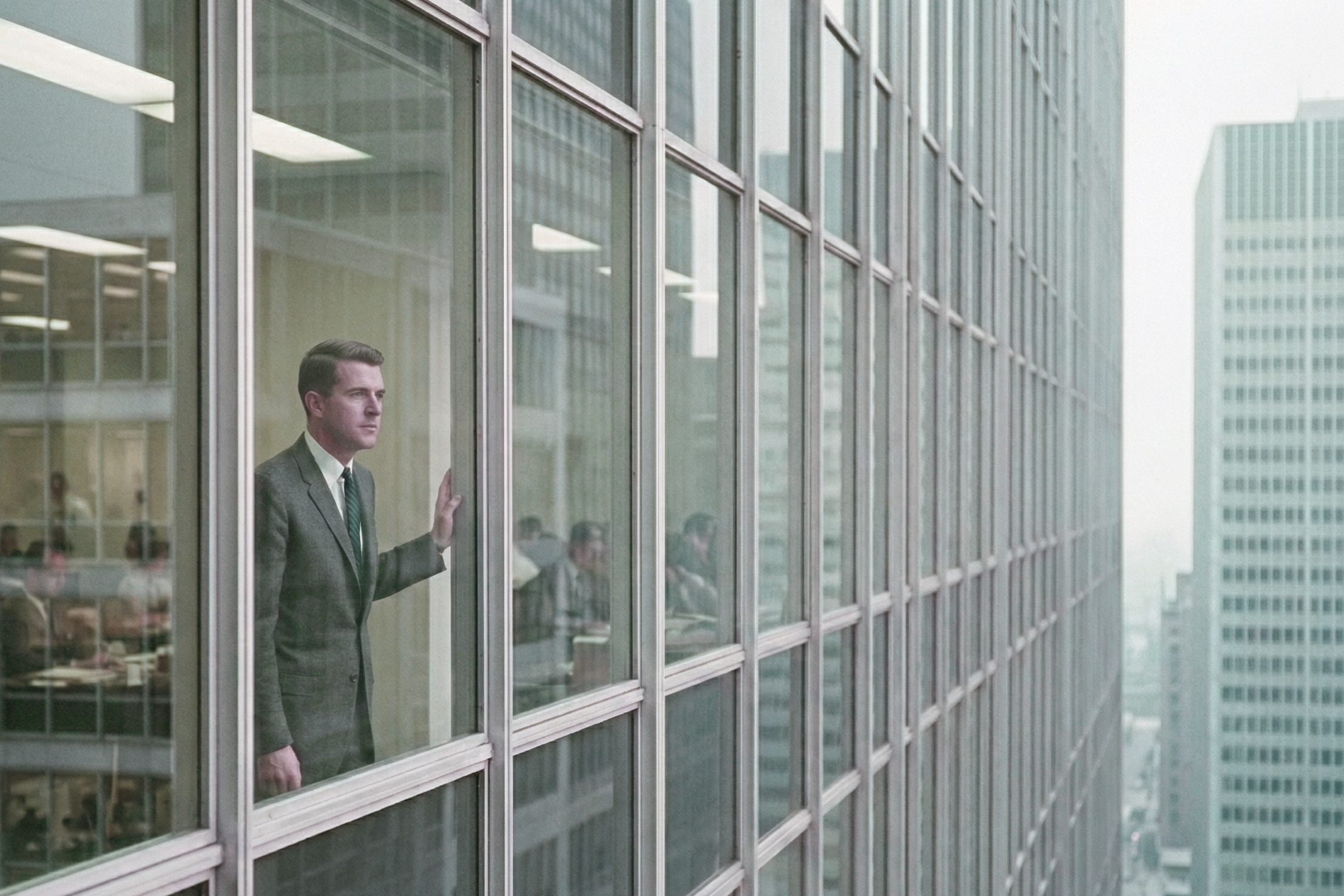
Soulless corporate-ness
Prominently used in corporate architecture for decades, the style is thus often used to depict a certain soullessness and routineness of corporate America
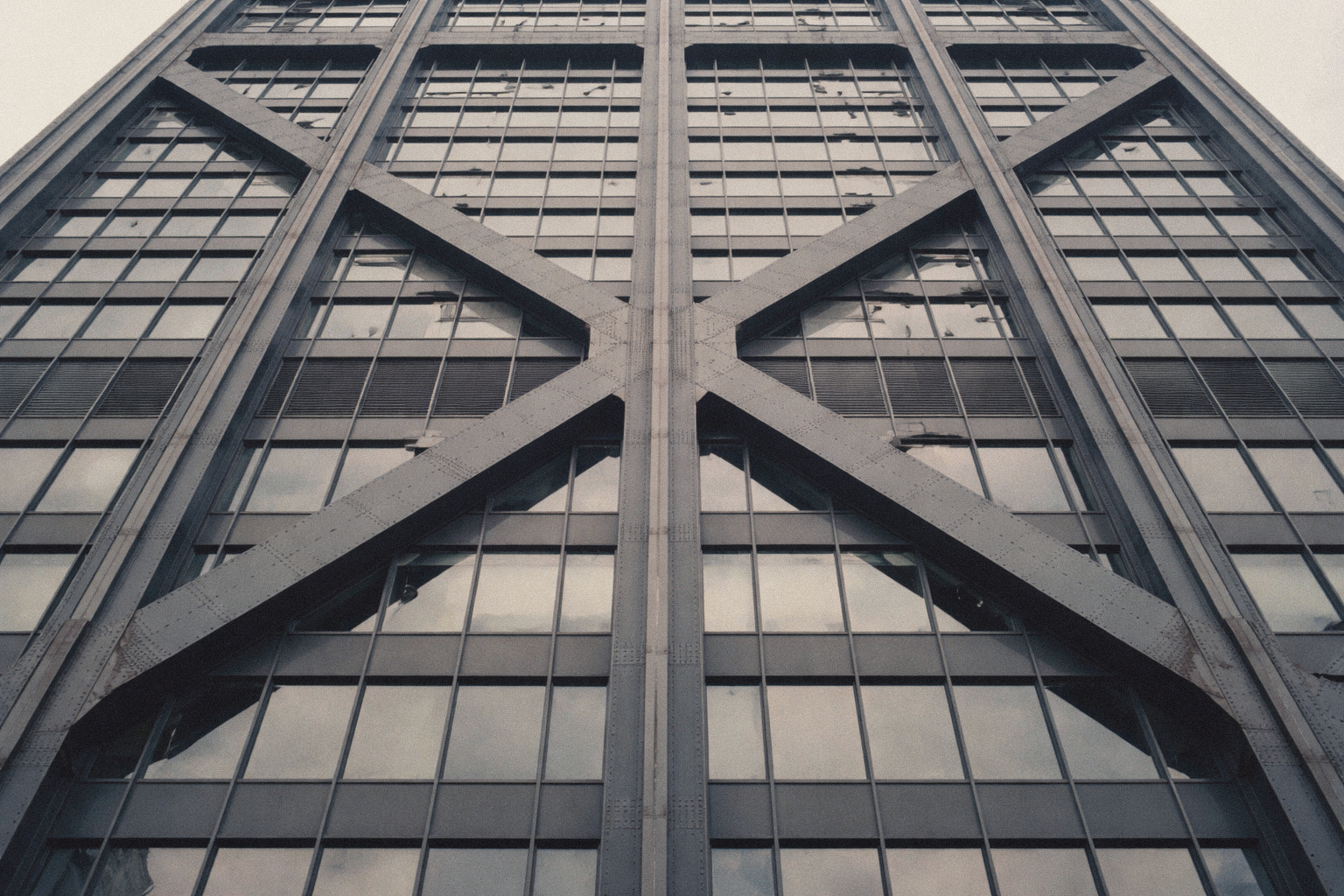
Showcased raw materials
Proud to showcase new construction techniques and raw materials of glass, steel, and concrete, buildings even use the exoskeleton in the design
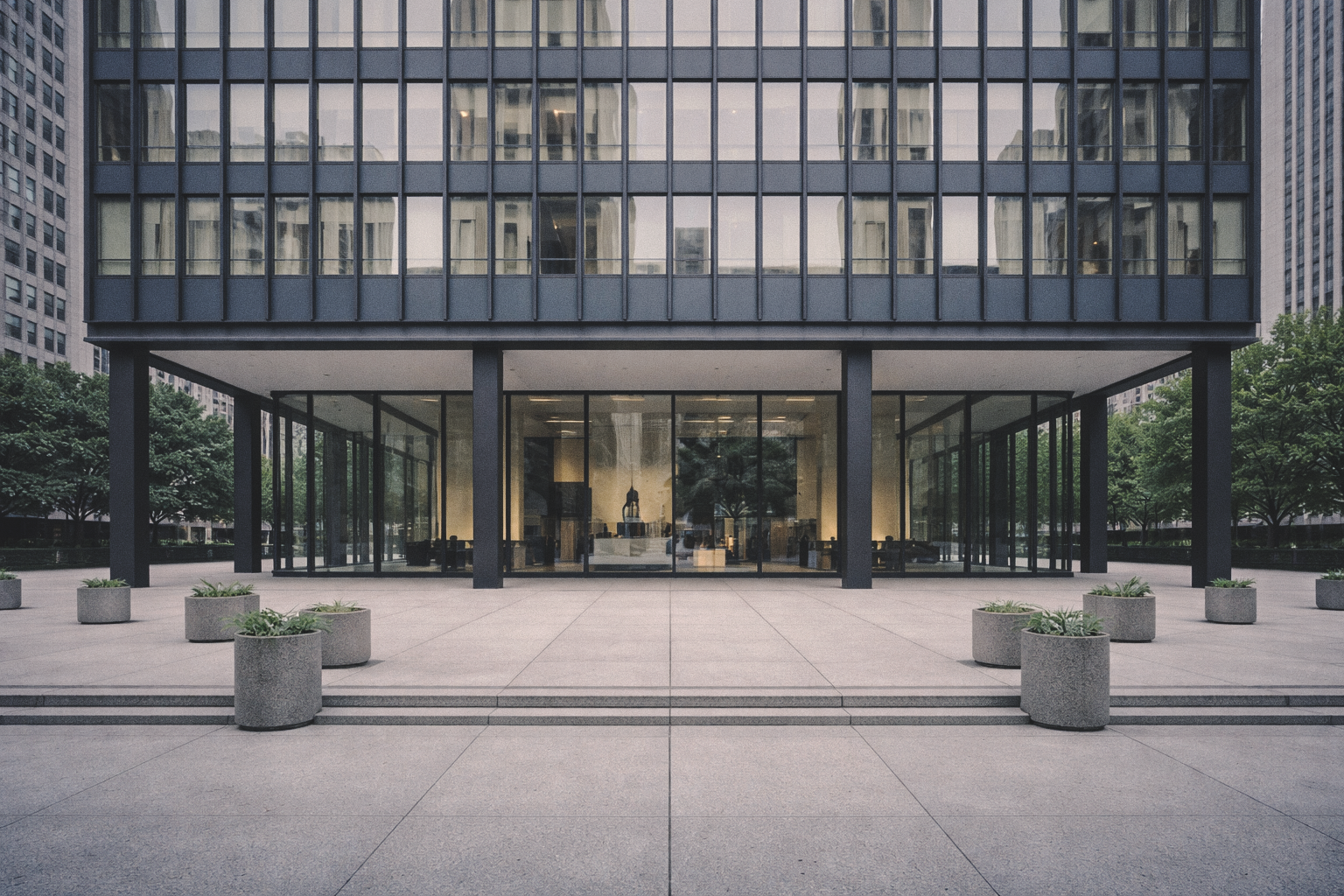
Cantilevered bases
More common in residential modern architeture, cantilevers give the impression of impossible weightlessness for such large structures
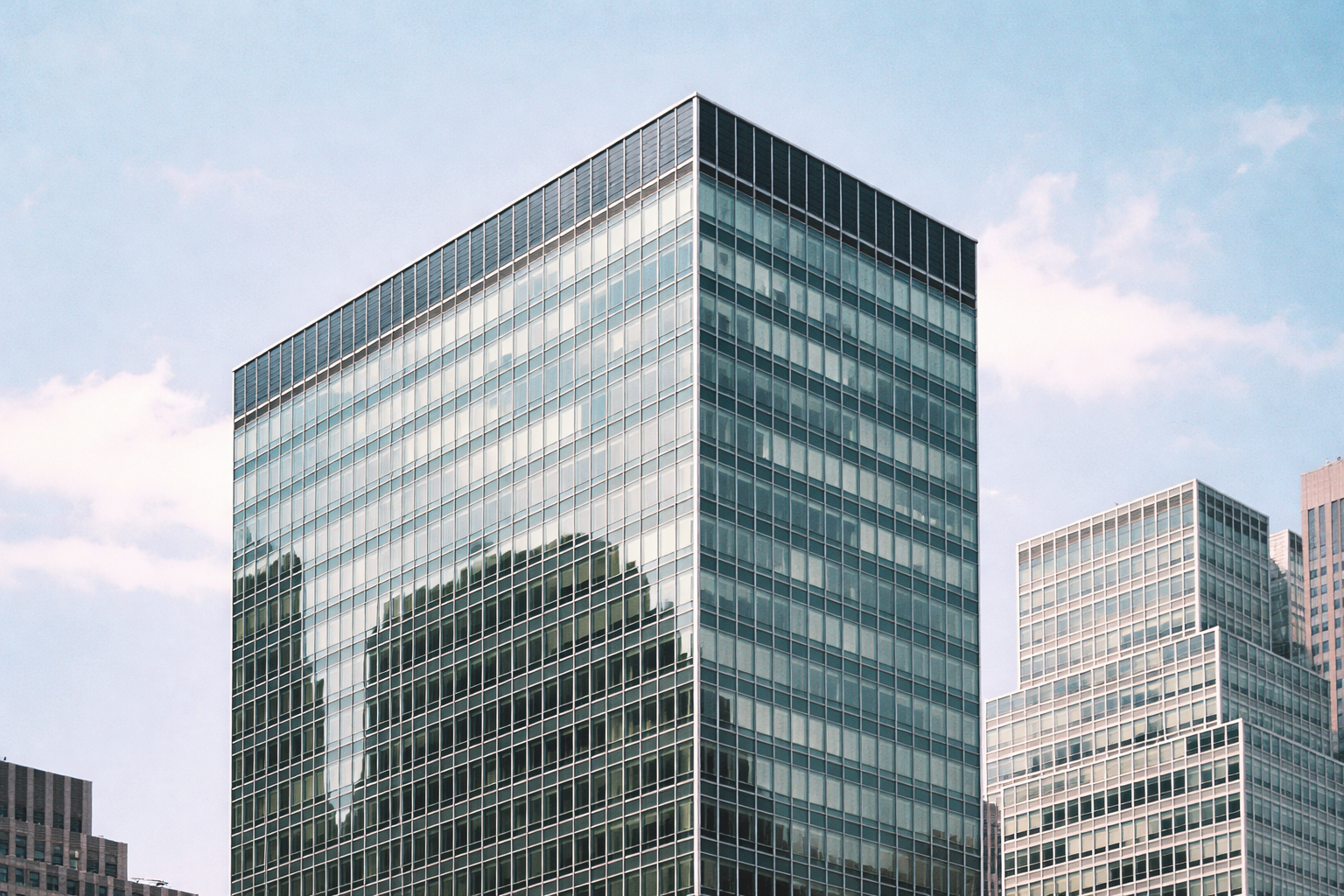
Uniformity, but not symmetry
Facades must be regular and uniform, but the overall shape of the building does not need to be symmetrical from front to sides, and often isn't
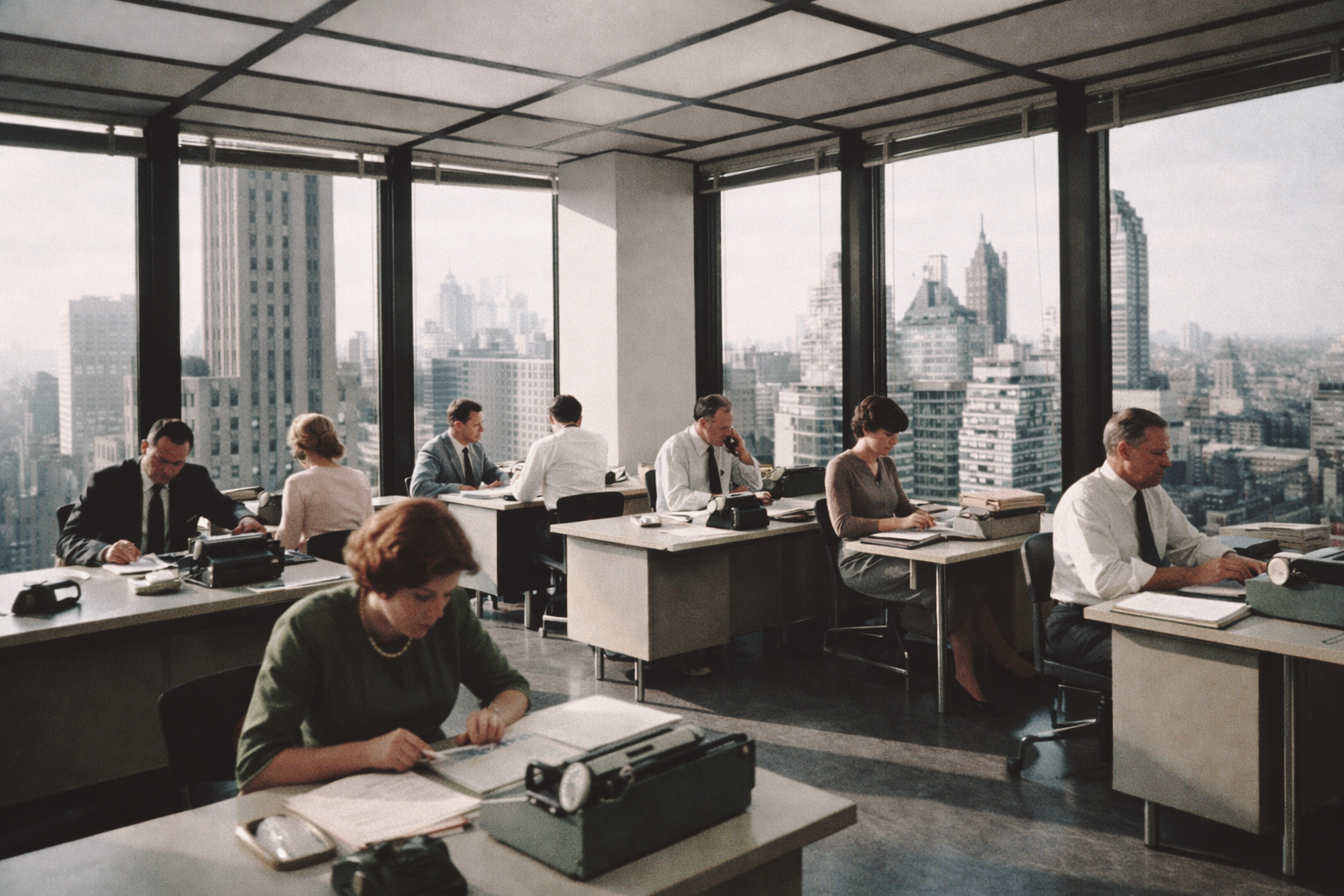
Midcentury legacy
Because the style was so prominent in the mid-20th century, images of those decades are tied very closely to this architecture, especially for offices